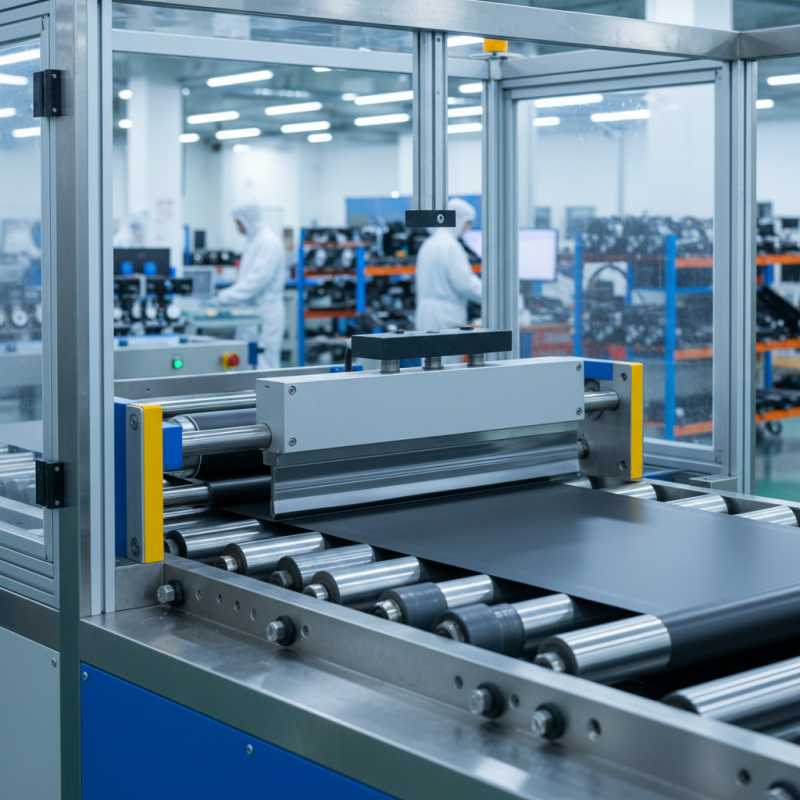
In the fast-paced world of manufacturing, efficiency is paramount. The Scraper Coating Machine stands out as a vital tool. According to industry expert Dr. Emily Carter, "The Scraper Coating Machine revolutionizes the application process, enhancing precision and speed." This machine is essential for various manufacturing sectors, from automotive to electronics.
Using a Scraper Coating Machine significantly boosts production rates. It applies coatings consistently, reducing waste and improving quality. However, it requires skilled operators to ensure optimal performance. Misalignment issues can lead to uneven coatings.
Investing in this technology may come with high initial costs. Manufacturers must weigh the benefits against budget constraints. Nonetheless, the long-term advantages often outweigh these concerns. The Scraper Coating Machine ultimately helps companies meet growing demands efficiently. Its impact on productivity and product quality cannot be overlooked.
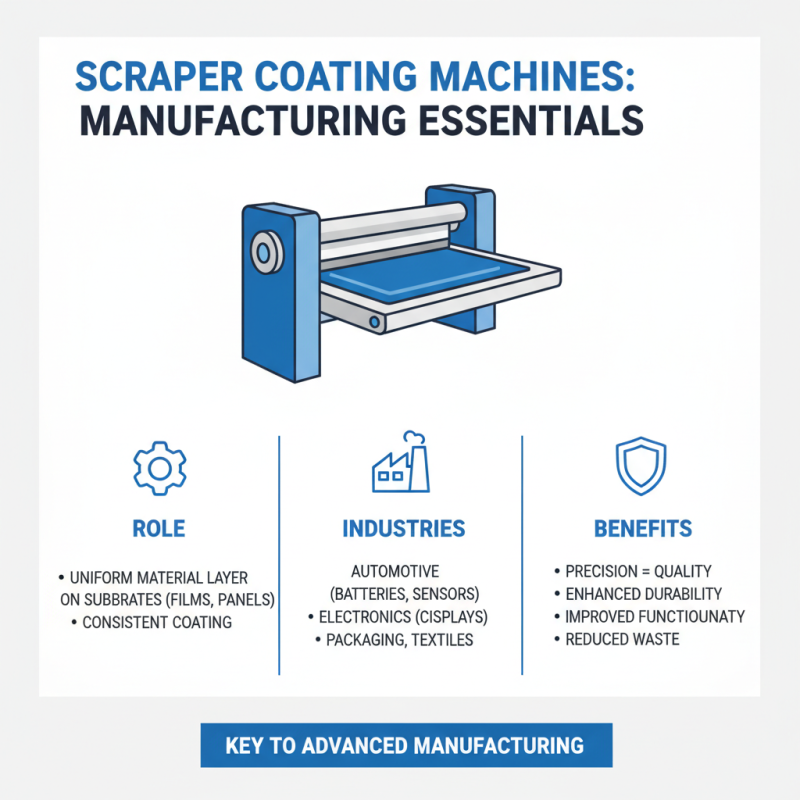
Scraper coating machines play a pivotal role in manufacturing processes. These machines apply a uniform layer of material on substrates, ensuring that coatings are consistent. In industries like automotive and electronics, precise coating is essential. This precision enhances product durability and functionality.
Understanding how scraper coating machines work is crucial for efficiency. The machine uses a scraper to spread the coating evenly. It adjusts to various substrate surfaces. This adaptability is beneficial, but it can also pose challenges. Misalignment or improper settings can lead to defects. Regular maintenance is necessary to avoid these issues. Users must be aware of the machine’s limitations.
Besides efficiency, scraper coating machines help reduce waste. A well-calibrated machine minimizes excess material use. However, operators should monitor the application closely. Even small mistakes can lead to product inconsistencies. Continuous training and feedback are vital. This can enhance overall process quality and operator skills.
Scraper coating machines have revolutionized manufacturing. They significantly enhance production efficiency. These machines apply coatings uniformly, ensuring consistency across products. This precision reduces waste and saves time. Workers spend less time on manual applications, leading to faster production rates.
Consider the workflow. Keep the machine well-maintained. A small oversight can affect coating quality. Regular checks ensure optimal performance. Adjust settings based on the material type for best results. This attention to detail yields superior products.
Training operators is crucial. They should understand the machine's capabilities and limits. Investing in training can prevent errors that delay production. Monitor the machine’s output closely. Even minor fluctuations can indicate larger issues. Implementing these strategies can lead to a smoother manufacturing process.
In manufacturing, uniform coating is crucial for product quality. A scraper coating machine provides consistent thickness and texture. This consistency reduces defects and inconsistencies in the final product. When paint or finish is evenly applied, the finished goods look polished. Visual appeal matters in many industries.
However, the application process can be tricky. In some cases, the equipment might not coat all surfaces evenly. This can happen due to improper machine settings or material variations. Regular maintenance is essential to avoid such issues. Operators need to be vigilant, checking for irregularities during the coating process.
Additionally, a learning curve exists when adapting to scraper machines. Training staff on its operation can take time. Mistakes may occur during the initial stages. Nevertheless, the effort pays off in the long run. With practice, manufacturers can achieve superior product quality. Consistent coating techniques often lead to higher customer satisfaction and fewer returns.
Scraper coating machines can lead to significant cost savings in manufacturing. They minimize material waste. This is crucial when dealing with expensive coatings. By applying a precise amount of material, these machines ensure every drop counts. Over time, businesses can see a noticeable reduction in material expenses. This allows for better budget allocation in other areas.
Moreover, maintenance costs are often lower with scraper coating machines. They typically require less frequent repairs compared to traditional methods. This reliability can save manufacturers both time and money. Investing in high-quality machinery is initially costly. However, the long-term savings on labor and materials often outweigh this investment.
Businesses often overlook training costs. Employees may need guidance when transitioning to new equipment. But once proficient, productivity increases dramatically. It's essential to weigh these considerations carefully. The overall efficiency gained can represent a significant return on investment. Adjusting to new technologies can be challenging, but the benefits usually make it worthwhile.
Scraper coating machines are incredibly versatile in modern manufacturing. They are used across various industries, enhancing production efficiency and product quality. In the food industry, these machines apply uniform coatings, improving the taste and appearance of products. According to a report by Markets and Markets, the demand for such machines is projected to grow by 7% annually through 2025. This growth is a testament to their effectiveness in meeting various application needs.
In the realm of pharmaceuticals, scraper coating machines play a crucial role in drug formulation. These machines ensure precise coating thickness, which is vital for consistency in medication delivery. A study by Grand View Research indicates that the global pharmaceutical coating equipment market is expected to reach USD 10.3 billion by 2027. Such statistics highlight the increasing reliance on scraper coating technology across diverse sectors.
Despite these advantages, the transition to scraper coating machines is not without challenges. Manufacturing teams must continually assess the machines' adaptability for new products and applications. Regular maintenance is essential to prevent downtime and ensure optimal performance. Striking a balance between high output and quality control often requires reflection and adjustment in manufacturing strategies.
| Benefit | Description | Applications |
|---|---|---|
| Increased Efficiency | Speeds up production processes by automating coating applications. | Automotive parts, electronics components |
| Consistent Quality | Ensures uniform application and reduces variability in coating thickness. | Consumer goods, industrial products |
| Cost Savings | Reduces material waste and labor costs associated with manual applications. | Various manufacturing sectors |
| Flexibility | Can handle a wide variety of substrates and coating materials. | Paints, adhesives, sealants |
| Reduced Worker Injury | Minimizes manual handling of heavy equipment and chemicals. | Factories, assembly lines |
| Customizable Settings | Allows operators to adjust parameters for different projects easily. | All manufacturing applications |
| High Precision | Offers precise control for intricate coating applications. | Medical devices, electronics |
| Quick Changeover | Facilitates rapid transition between different product runs. | Batch production, custom jobs |
| Improved Adhesion | Enhances the bonding properties of coatings applied. | Building materials, automotive |
| Environmentally Friendly | Utilizes less solvent and reduces emissions. | Green manufacturing initiatives |