What is Coating Equipment and How Does it Work?
Coating equipment plays a vital role in various industries, from manufacturing to aerospace. John Smith, an expert in industrial coatings, says, "The right coating equipment can make or break a production line." This quote highlights the importance of selecting the appropriate tools for effective coating applications.
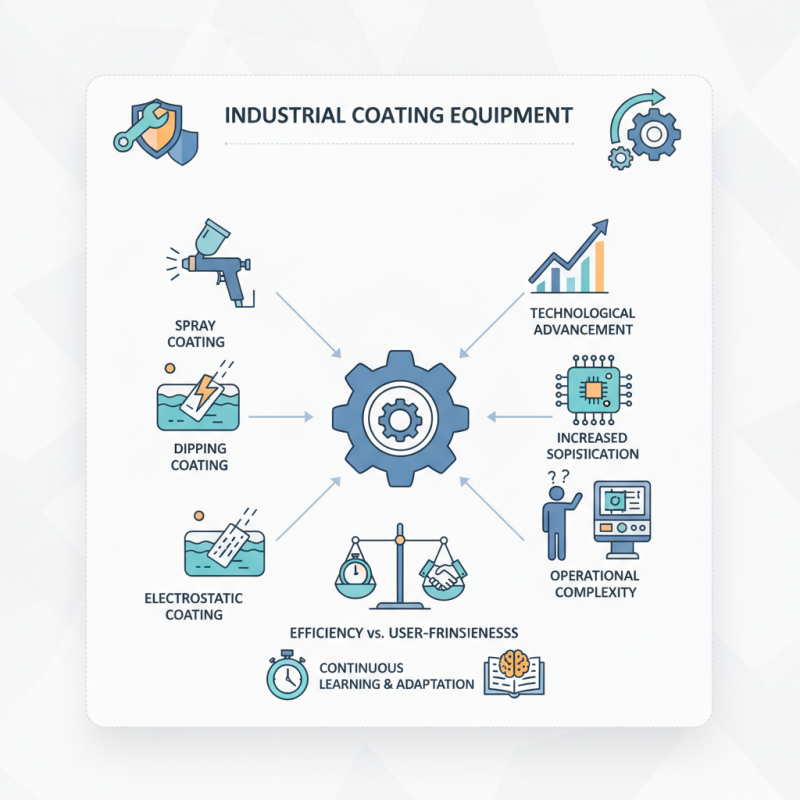
Understanding coating equipment is essential for achieving high-quality finishes. These machines apply layers of material to surfaces, ensuring durability and protection. Their functions and mechanisms are diverse, reflecting the specific needs of different sectors. For instance, some equipment uses spray techniques, while others employ dipping or electrostatic methods. Each approach has its own advantages and challenges.
As technology advances, coating equipment becomes more sophisticated and efficient. However, innovation also brings complexity. Sometimes, operators may struggle with the intricacies of new machines. Maintaining a balance between efficiency and user-friendliness remains a challenge. The ongoing evolution of coating equipment emphasizes the need for continuous learning and adaptation in the industry.
Definition and Overview of Coating Equipment
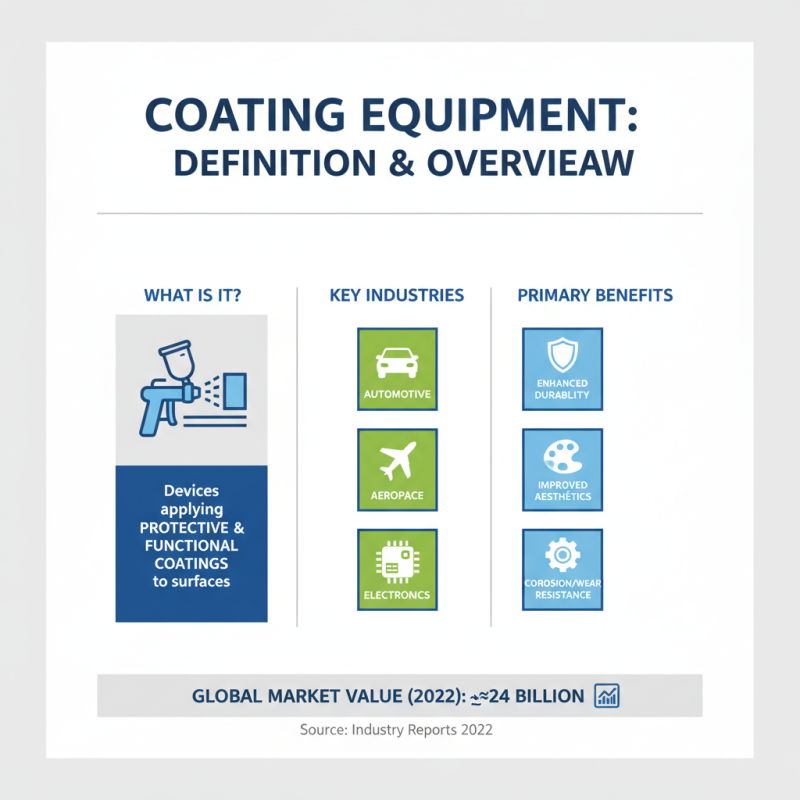
Coating equipment plays a crucial role in various industries, including automotive, aerospace, and electronics. It refers to devices used to apply protective and functional coatings to surfaces. The aim is to enhance durability, improve aesthetics, and provide resistance to corrosion or wear. In 2022, the global coating equipment market was valued at approximately $24 billion, demonstrating its significance in manufacturing processes.
Different methods are used in coating applications. For example, spray coating is a common technique that requires precision and control. The process involves atomizing a liquid coating to form a fine mist. This mist is then directed onto the substrate, ensuring uniform coverage. According to industry reports, advancements in technology have improved the efficiency of these coatings. However, there are still challenges. Achieving a perfect finish without defects remains a key concern for manufacturers.
With growing environmental regulations, manufacturers face pressure to adopt greener practices. Water-based coatings are gaining popularity for their lower volatile organic compounds (VOCs). Yet, transitioning to these options can be complex. Training for operators is essential but often overlooked. Successful application often depends on skilled personnel, indicating a gap in industry standards. As the coating technology evolves, continuous education and adaptability will be critical for success.
Types of Coating Equipment and Their Applications
Coating equipment plays a critical role across various industries, enhancing product durability and aesthetics. Different types of coating equipment are available, each tailored for specific applications. Spray coating is widely used in automotive and aerospace sectors. According to a recent industry report, spray coating can improve coating efficiency by up to 30%. This method allows for uniform coverage and reduces material waste.
Another common type is powder coating. This technique utilizes a dry powder that is electrostatically applied to the surface. Once heated, the powder melts and forms a hard finish. It is particularly favored in manufacturing processes due to its strong adhesion and resistance to chipping. Data indicate that powder coating can increase the lifespan of metal components by 25% or more.
However, not all coating methods are without limitations. Some techniques may require meticulous surface preparation, which can be time-consuming. The environmental impact of certain solvents used in liquid coatings is another area of concern. Industry experts suggest ongoing improvements in environmental regulations can drive innovation in sustainable coating solutions, highlighting a need for the sector to adapt and evolve continuously.
Principles of Operation for Coating Equipment
Coating equipment plays a pivotal role in various industries by providing surfaces with protective and decorative layers. Understanding its principles of operation is essential for effective application. Coating typically involves the deposition of materials through techniques such as spraying, dipping, or electrostatic application. These methodologies can vary, impacting both the thickness and adhesion of the coating. For instance, proper control over parameters like temperature and viscosity can significantly influence the final product quality.
According to a recent report by Market Research Future, the global painting and coating industry is projected to reach $183 billion by 2025. This growth emphasizes the need for high-performance coating equipment. Operators should understand the chemistry behind each coating material. Misjudgments in this area can lead to failures in adhesion or premature wear. It is common for operators to overlook the importance of surface preparation, which can lead to an increase in production costs.
**Tip:** Regular maintenance of equipment ensures optimal performance and longevity. Investing in high-quality components can prevent costly breakdowns. Look for training opportunities to stay updated on advancements in technology. Proper techniques can enhance efficiency and reduce waste, benefiting both the environment and the bottom line.
What is Coating Equipment and How Does it Work? - Principles of Operation for Coating Equipment
| Coating Type |
Application Method |
Typical Materials |
Key Benefits |
Common Industries |
| Powder Coating |
Electrostatic Spraying |
Thermosetting and Thermoplastic Polymers |
Durability, Corrosion Resistance |
Automotive, Appliances, Metal Fabrication |
| Wet Coating |
Spray, Dip, Roll |
Solvent-Based and Water-Based Paints |
Versatility, Wide Color Range |
Construction, Furniture, Electronics |
| Vacuum Coating |
Physical Vapor Deposition (PVD) |
Metals, Oxides, Multi-layer Films |
Thin Films, High Adhesion |
Optics, Electronics, Aerospace |
| CVD Coating |
Chemical Vapor Deposition |
Diamond-like Carbon, Silicon Dioxide |
High Temperature Resistance |
Semiconductors, Tool Manufacturing |
| Anodizing |
Electrolytic Process |
Aluminum and Aluminum Alloys |
Corrosion Resistance, Aesthetic Finishing |
Aerospace, Automotive, Architectural |
Key Components of Coating Equipment and Their Functions
Coating equipment plays a vital role in various industries, including automotive, aerospace, and electronics. Understanding its key components aids in optimizing its performance. A central element is the spray gun, which atomizes the coating material. This atomization is crucial for achieving even coverage and minimizes material waste. According to the Coating Industry Report, approximately 30% of coatings are lost during application due to inefficient spraying techniques.
Another essential component is the curing system. This could be a UV, heat, or chemical curing process. It varies based on the type of coating applied. Curing ensures that the coating adheres properly and gains its desired properties. Research indicates that proper curing can enhance the durability of coatings by up to 50%. However, many facilities struggle with curing consistency, leading to potential quality issues.
Finally, the filtration system cannot be overlooked. It removes impurities from the coating material, preventing defects in the final product. Inadequate filtration can lead to surface imperfections, affecting overall aesthetics and performance. Industry data shows that defects from poor filtration can cost manufacturers up to 15% in rework and material loss. These components collectively enhance the efficiency and quality of coating processes, yet room for improvement remains in operational practices.
Coating Equipment Usage by Industry
Maintenance and Safety Considerations for Coating Equipment
Proper maintenance of coating equipment is crucial for ensuring operational efficiency and safety.
Regular inspections should be part of the maintenance schedule. According to a report by the Industrial Coatings Association, up to
40% of equipment failures can be attributed to lack of maintenance. Simple tasks like cleaning and lubricating parts can prevent costly downtime.
Operators should maintain a log of activities. This practice helps identify trends and potential issues early.
Safety is another significant aspect of coating equipment. The National Safety Council highlights that improper handling can lead to accidents, such as slips or equipment malfunctions.
Workers should be trained on safety protocols. Using personal protective equipment (PPE) is essential. Additionally, ensuring that all safety devices are functional can mitigate risks.
A study published in the Journal of Coating Technology found that 25% of coating incidents were linked to safety procedure lapses.
Equipment calibration also requires attention. Inaccurate settings can lead to product defects and safety hazards. Reports indicate that
15% of coating failures are due to improper calibration. Regular checks should be emphasized. Involving team members in the maintenance process can foster a culture of safety and responsibility.
The goal is to minimize risks and enhance productivity in the workplace.