Top Tips for Choosing a Hot Melt Coating Machine?
The choice of a Hot Melt Coating Machine is critical for manufacturers seeking efficiency and quality. In a study by MarketsandMarkets, the hot melt adhesive market is expected to reach $8.8 billion by 2025, indicating strong demand. This growth emphasizes the importance of selecting the right equipment to meet industry standards.
Quality coatings enhance product durability and performance. Yet, choosing the right machine can be complex. Factors such as application type, production volume, and material compatibility must be considered. Some machines excel in specific applications but may fall short in others, leading to potential production issues or quality concerns.
Investing in a Hot Melt Coating Machine involves reflection on long-term needs versus immediate gains. Evaluating durability, cost-effectiveness, and supplier support is essential. A well-suited machine not only boosts efficiency but also contributes to overall product integrity, a critical factor in today’s competitive landscape.
Understanding Hot Melt Coating Machines: An Overview
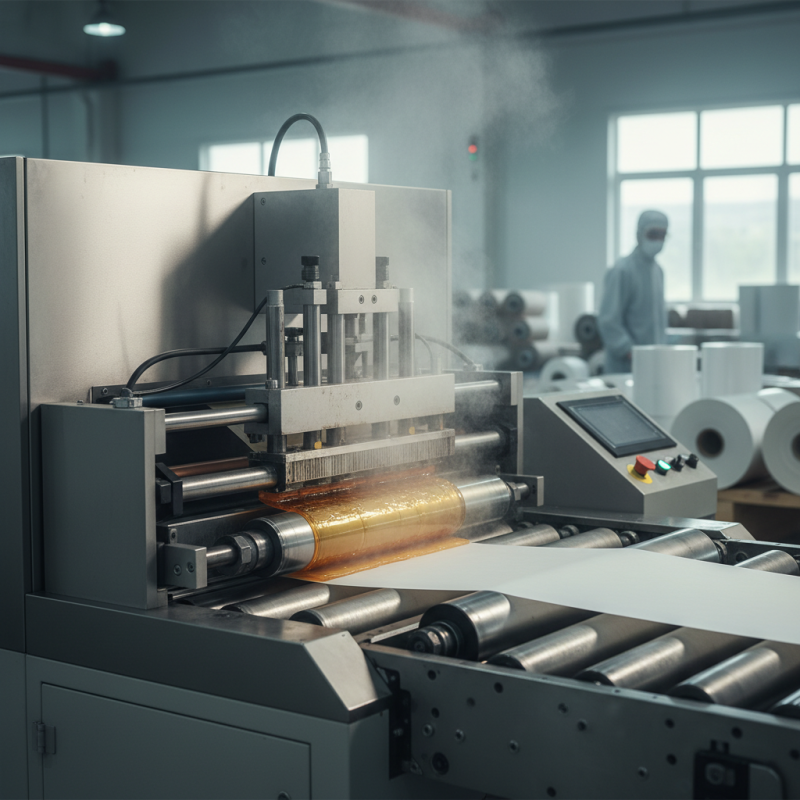
Hot melt coating machines are essential in various industries. They apply a thermoplastic adhesive onto surfaces, providing durability and protection. These machines work by melting the adhesive and evenly distributing it, creating a strong bond when cooled. Understanding the mechanics of these machines is crucial for selecting the right one.
When choosing a hot melt coating machine, consider factors such as application method, temperature control, and settings. The machine's capability to handle different adhesive types is also important. For instance, some materials can be challenging, leading to uneven coatings if the wrong machine is used. User feedback is vital. Seek insights from experienced operators to learn from their trials.
A common issue with hot melt coating machines is inconsistency in application. Operators must frequently monitor performance to avoid defects. This is a learning curve many face. Additionally, maintenance plays a key role in functionality. Neglecting upkeep can lead to breakdowns, disrupting production flow. Thus, an understanding of operational challenges helps in making a well-informed decision.
Key Considerations for Selecting the Right Hot Melt Coating Technology
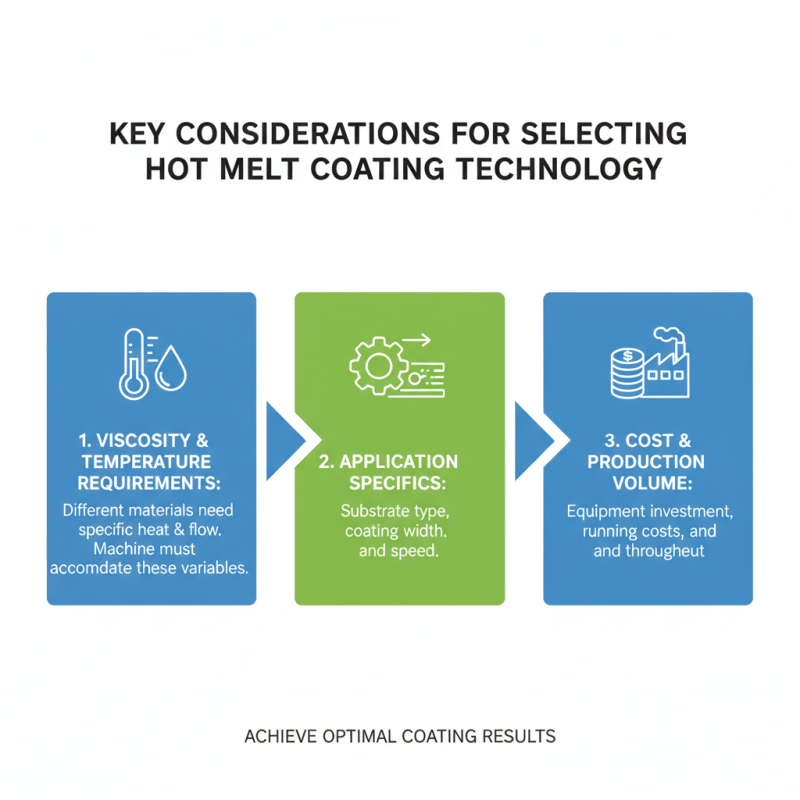
When selecting a hot melt coating technology, several key considerations must be addressed. First, assess the viscosity and temperature requirements for your specific application. Different materials have unique properties, which affect how they behave during the coating process. Choosing a machine that accommodates these variables is crucial for achieving optimal results.
Another aspect to consider is the production scale. Smaller operations may require a compact machine that is easy to operate and maintain. On the other hand, larger facilities might benefit from more complex systems with higher capacities. It's essential to evaluate the long-term operational costs, including maintenance and energy usage, to ensure efficiency.
Additionally, user-friendliness matters. Operators should easily understand the controls and features. However, training may still be necessary. Reflect on the potential learning curve for your team. Ultimately, making the right choice involves a blend of technical specifications and practical considerations, requiring a thoughtful approach.
Evaluating Different Types of Hot Melt Coating Machines Available
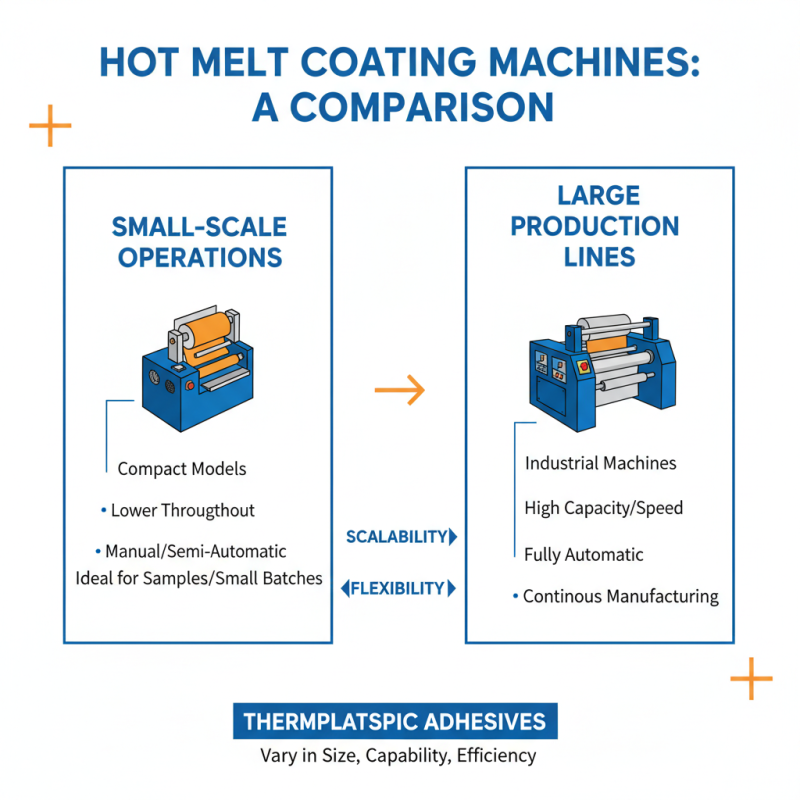
When evaluating different types of hot melt coating machines, it’s crucial to understand their primary functions and features. Hot melt coating machines generally use thermoplastic adhesives. These machines can vary in size, capability, and efficiency. Some models are compact, perfect for small-scale operations, while others are designed for larger production lines.
Each type of machine offers unique advantages. For example, some machines come with advanced temperature control systems. This feature ensures precise melting and application of the adhesive. Certain machines may provide adjustable coating thickness options, allowing flexibility for various applications. However, it’s important to consider the ease of maintenance and support services available for each type.
Investing in a hot melt coating machine can be daunting due to the numerous choices. While some machines may seem appealing at first glance, it’s essential to reflect on their long-term reliability. User reviews and expert opinions can offer insights into durability and performance. Ultimately, the best choice will align with specific production needs, budget, and operational workflow.
Assessing Production Needs and Specifications for Hot Melt Coating
When choosing a hot melt coating machine, understanding your production needs is essential. A comprehensive assessment of your existing processes can yield valuable insights. Industry reports indicate that 70% of manufacturers fail to optimize their equipment due to inadequate evaluations. Evaluating your production volume, speed, and flexibility should be a priority. Each parameter directly influences the selection criteria.
Specific applications dictate the required specifications. Machines suitable for packaging differ from those used in automotive or electronics. For instance, adhesive formulations vary across industries. A report from the Adhesive and Sealant Council highlights that 40% of technical issues stem from mismatched machine capabilities. Aligning machine features with production needs enhances reliability and minimizes downtime.
Another critical aspect is energy consumption and environmental impact. Many machines now offer efficiencies that can reduce waste and operating costs. However, the initial investment may deter some businesses. Consideration must be given to the long-term savings versus upfront expenses. Engaging with industry experts can help bridge these gaps in understanding. Balancing short-term constraints with long-term goals is vital in making informed choices.
Hot Melt Coating Machine Production Needs Assessment
Budgeting and Cost Analysis for Hot Melt Coating Machine Purchase
Choosing a hot melt coating machine involves careful budgeting and cost analysis. A well-thought-out financial plan is vital. Start by determining the initial purchase price of the machine. This is not just the upfront cost. Consider installation fees, training for operators, and any additional equipment needed.
Next, evaluate the operating costs. These include energy use, maintenance, and material expenses. Each of these factors can significantly influence your long-term investment. It's important to factor in potential downtime costs as well. A machine that frequently malfunctions can lead to substantial loss, both in time and productivity.
Finally, consider the return on investment (ROI). Ask industry experts about typical performance outcomes. Understand how much your production capacity could grow with the new machine. Reflect on past purchases to learn from experiences. Not every machine will yield the expected benefits. Each decision requires thorough research and ongoing analysis to ensure it meets your needs.
Top Tips for Choosing a Hot Melt Coating Machine - Budgeting and Cost Analysis for Hot Melt Coating Machine Purchase
| Feature |
Value/Description |
Estimated Cost ($) |
Considerations |
| Machine Type |
High-Speed, Semi-Automatic |
15,000 |
Suitable for high-volume production |
| Output Capacity |
1000 meters/minute |
- |
Depends on production needs |
| Heating Method |
Electric, Infrared |
- |
Efficiency and temperature control |
| Maintenance Cost |
Annual Service Required |
2,000 |
To ensure machine longevity |
| Training Requirement |
Operator Training Course |
500 |
Important for safety and efficiency |
| Warranties |
2 Years |
- |
Check for coverage details |