Top 10 Laboratory Coating Machines for Global Buyers?
The demand for Laboratory Coating Machines is on the rise. These machines play a crucial role in the development of pharmaceutical, food, and cosmetic products. Their ability to apply coatings consistently is a significant advantage. Many buyers seek reliable options that meet their specific needs.
Selecting the right Laboratory Coating Machine can be challenging. There are various features and specifications to consider. A machine's size, coating method, and capacity all influence performance. Potential buyers may feel overwhelmed by the options available. Understanding these nuances can enhance decision-making.
Quality is paramount in laboratory settings. A reliable coating machine ensures accurate results and reproducibility. However, not all machines meet these criteria. Therefore, careful evaluation is essential. The following outlines ten top Laboratory Coating Machines for global buyers. This list aims to clarify the best choices available. It will equip buyers with the knowledge needed to make informed decisions.
Overview of Laboratory Coating Machines in the Global Market
Laboratory coating machines play a crucial role in various industries, particularly in pharmaceuticals and biotechnology. They apply uniform coatings to particles, enhancing product stability and performance. According to a recent market report, the laboratory coating machine sector is projected to grow at a compound annual growth rate (CAGR) of 5.6%, reflecting a surge in R&D activities worldwide.
These machines vary widely in technology and capacity. For instance, some are designed for small-scale applications, while others are suitable for larger batches. A detailed evaluation of user needs is essential. Selecting an inappropriate machine can lead to inefficiencies and increased costs. Understanding coating methodologies is also vital; different processes may require specific machine features.
Tip: Always assess your lab's particular requirements before investing. Perform thorough research, focusing on features that align with your goals. Furthermore, engage with user reviews and expert opinions to gather insights. Proper machine maintenance can markedly improve longevity and performance. Remember, avoiding common pitfalls is key to optimizing your coating processes.
Key Features and Technologies in Modern Laboratory Coating Machines
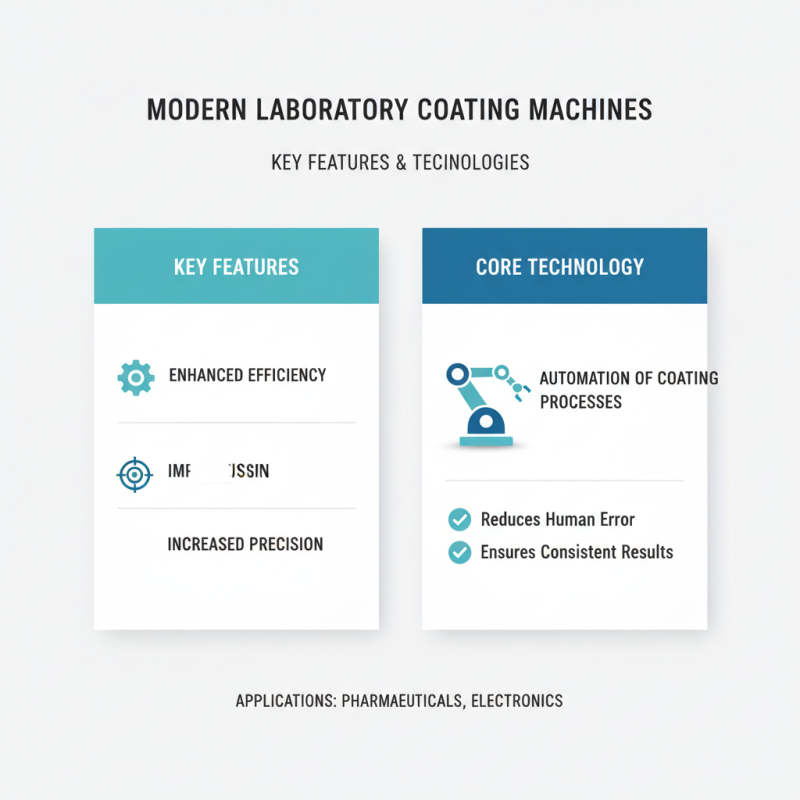
Modern laboratory coating machines play a crucial role in various fields, including pharmaceuticals and electronics. These machines are designed with advanced features that enhance their efficiency and precision. One notable technology is the automation of coating processes. Automation reduces human error and ensures consistent results.
Another key feature is adjustable parameters. Users can modify speed, temperature, and pressure to suit different materials. This flexibility allows for the use of diverse substrates. Additionally, many machines now include real-time monitoring systems. This technology enables users to track the coating process and make adjustments when necessary.
Despite these advancements, challenges remain. Some machines can be complex to operate, requiring training. Maintenance is essential to ensure consistent performance. Users might experience difficulties with specific coatings. Striking a balance between efficiency and complexity is crucial. Continuous innovation is needed to address these issues effectively.
Top 10 Laboratory Coating Machines: Performance and Specifications
When selecting laboratory coating machines, performance and specifications are crucial. Not all machines offer the same capabilities. Some excel in precision, while others may lack consistency in their results. A high-quality machine should provide uniform coating thickness, which directly affects the final product. For example, some designs incorporate advanced controls that regulate speed, pressure, and temperature, ensuring a reliable coating process every time.
Material compatibility is also essential. Certain machines may work well with specific substrates but falter with others. It’s important to consider the range of materials your laboratory uses. Additionally, the ease of cleaning and maintenance can impact productivity. Machines that are difficult to clean could lead to downtime and inefficiencies.
Some machines claim to be versatile, yet users often find limitations in their applications. User experience matters; a machine may look impressive, but real-world performance can differ. It's vital to read reviews and gather feedback from other users. Engaging with communities or forums can shed light on the actual performance of each machine, helping buyers make informed decisions.
Top 10 Laboratory Coating Machines Performance Comparison
Market Trends and Consumer Preferences in Laboratory Coating Equipment
In recent years, the laboratory coating equipment market has experienced significant growth. A recent report indicated that the market is projected to reach $1.5 billion by 2025, driven primarily by advancements in technology and increased demand for high-quality coatings. Consumers are leaning towards machines that not only enhance efficiency but also ensure consistent quality and precision.
Moreover, user preferences are shifting towards machines that offer versatility. Many labs now require equipment capable of handling various substrates and coating materials. Data shows that about 35% of buyers prioritize machines that allow for easy integration with existing laboratory workflows. However, despite this trend, some labs still struggle with workflow adaptability, highlighting a gap between technology and practical use. This reflects a need for continued development in user-friendly features.
Sustainability is also becoming a critical factor in purchasing decisions. Approximately 45% of consumers are now looking for eco-friendly options. Labs are under pressure to reduce their environmental impact while maintaining productivity. In this light, coating machines that utilize biodegradable materials are gaining attraction. Yet, such options may not always deliver the same performance, which poses a challenge for labs aiming for both environmental responsibility and high-output results.
Future Innovations in Laboratory Coating Technologies and Applications
The landscape of laboratory coating technologies is rapidly evolving. Researchers are exploring innovative methods to enhance precision and efficiency. New materials are improving adhesion and durability. This shift opens doors for diverse applications in pharmaceuticals, electronics, and food safety.
Emerging technologies such as nano-coating and micro-patterning are gaining traction. They enable finer control over coating thickness and uniformity. However, the adoption of these techniques may face challenges. For instance, scaling up from laboratory settings to industrial production often encounters hurdles. There’s a need for more robust testing protocols to ensure reliability.
While the future looks promising, some aspects warrant caution. The integration of artificial intelligence in coating processes holds potential, but it raises questions about consistency and quality control. Balancing innovation with safety and efficacy remains a priority for researchers and manufacturers alike. As we venture into this exciting terrain, continuous reflection on methodologies and outcomes is essential to ensure advancements are both sustainable and responsible.