Top 10 Laboratory Coating Machines You Should Consider in 2026
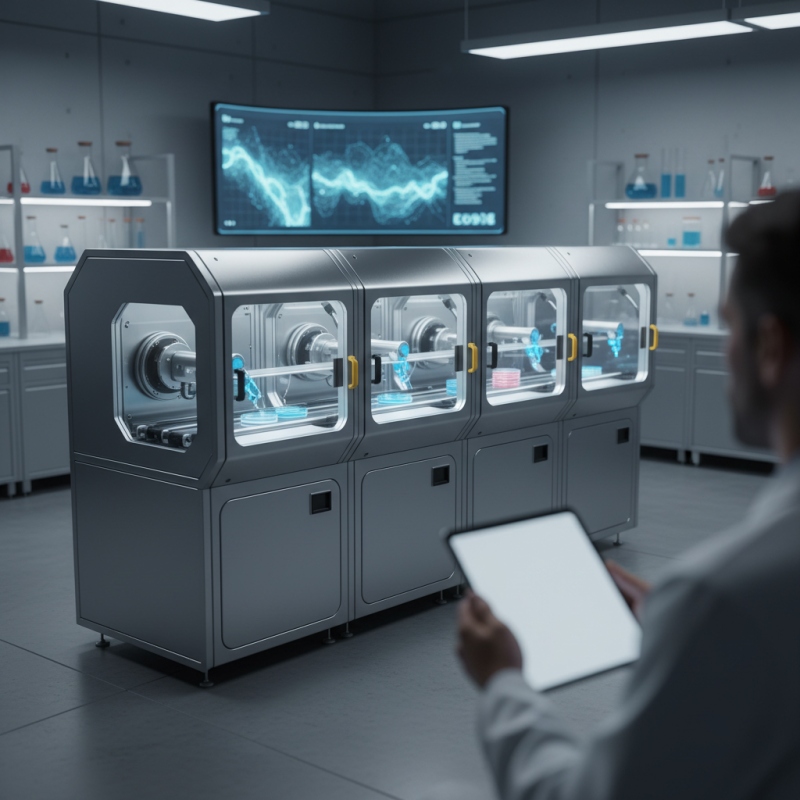
As we look ahead to 2026, the demand for advanced laboratory coating machines is growing rapidly. These machines play a crucial role in various scientific and industrial applications. Their ability to apply uniform coatings enhances the performance of many products, from pharmaceuticals to electronics.
However, finding the right laboratory coating machine can be a daunting task. There are numerous factors to consider, including the machine's capability, efficiency, and cost. Each model has its strengths, but some may fall short for specific applications.
This guide presents the top 10 laboratory coating machines worth considering. These selections are based on industry expertise and the latest technological advancements. Investing in the right equipment is essential for improving product quality and accelerating research. As you explore these options, reflect on your specific needs and applications. It’s vital to choose wisely.
Top Trends in Laboratory Coating Technologies for 2026
As we look ahead to 2026, laboratory coating technologies are evolving rapidly. One major trend is the integration of artificial intelligence in coating processes. AI algorithms optimize application techniques, leading to improved uniformity and precision. This can significantly enhance product quality, ensuring that lab results are consistent and reliable.
Another trend is the shift toward environmentally friendly coatings. Scientists are increasingly exploring biodegradable materials. These options reduce the ecological footprint of laboratory operations. However, transitioning to these new materials can pose challenges in terms of performance consistency and application techniques.
Additionally, the demand for miniaturization in laboratory equipment stands out. Smaller machines occupy less space while retaining high efficiency. This compact design can complicate the coating process, as precision becomes critical. It might take time for researchers to adjust to this shift. Balancing size with performance is an ongoing challenge in the industry.
Advantages of Automated Coating Machines in Modern Laboratories
Automated coating machines are revolutionizing modern laboratories. These machines enhance precision and efficiency in the coating process. According to a recent industry report, automated systems can reduce coating errors by over 30%. This improvement significantly decreases waste and increases output quality. Laboratories utilizing such advanced technology often report enhanced workflow and decreased labor costs.
Another notable advantage is the consistency that automated coating machines provide. Research shows that 70% of laboratories prefer automated solutions for their ability to deliver uniform coatings across batches. This consistency is crucial for experiments requiring strict reproducibility. However, integrating automation does present challenges. Some labs struggle to adapt to new technologies and workflows. Training and support are necessary to maximize benefits.
Scalability is another key advantage. Automated machines can easily adjust to varying production volumes. This flexibility is invaluable for labs with changing project demands. However, without proper maintenance, these machines can underperform. Regular checks are essential to ensure optimal efficiency. Embracing automation requires ongoing commitment and adjustment. Yet the potential rewards are significant.
Top 10 Laboratory Coating Machines You Should Consider in 2026
| Rank |
Machine Type |
Coating Technology |
Batch Size |
Key Advantages |
| 1 |
Spray Coater |
Air Spray |
50-100 L |
Versatile application, high precision |
| 2 |
Dip Coater |
Immersion |
20-200 L |
Cost-effective, simple operation |
| 3 |
Roll Coater |
Roller Application |
30-150 L |
Uniform coating, high efficiency |
| 4 |
Fluid Bed Coater |
Fluidization |
10-50 L |
Controlled environment, precise coating |
| 5 |
Electrostatic Coater |
Electrostatic Spray |
10-100 L |
Reduced wastage, fine control |
| 6 |
Vacuum Coater |
Physical Vapor Deposition |
5-30 L |
High durability, uniform layers |
| 7 |
Slot Die Coater |
Slot Die |
25-150 L |
High speed, minimal defect rate |
| 8 |
Spin Coater |
Centrifugal Force |
1-10 L |
Thin films, high uniformity |
| 9 |
Sputter Coater |
Sputtering |
5-20 L |
Highly controlled thickness, versatile materials |
| 10 |
Nanocoater |
Nanostructured Coatings |
5-50 L |
Enhanced performance, functionality |
Key Specifications to Consider for Laboratory Coating Machines
When selecting a laboratory coating machine, several key specifications should be prioritized. Consider the machine's capacity. Larger capacities can streamline production but may require more space. Evaluate the speed of the coating process as well. Faster machines can significantly reduce turnaround time, which is essential for high-demand environments.
The type of coating technology is another vital aspect. Different applications may benefit from specific technologies, such as rotary or spray systems. Accuracy in coating thickness is crucial for achieving consistent results. Machines with advanced control systems often provide better precision.
Compatibility with various substrates should also be examined. Some machines perform well with specific materials while struggling with others. Users should also reflect on the maintenance requirements of these machines. A low-maintenance option can save time and reduce downtime. However, sometimes simpler machines might fail under heavy use. Always consider both performance and durability to ensure long-term reliability.
Top 10 Laboratory Coating Machines in 2026
This chart displays the top 10 laboratory coating machines available in 2026 based on their maximum speed and capacity. As technology advances, the efficiency of these machines is projected to improve, facilitating better performance in laboratory settings.
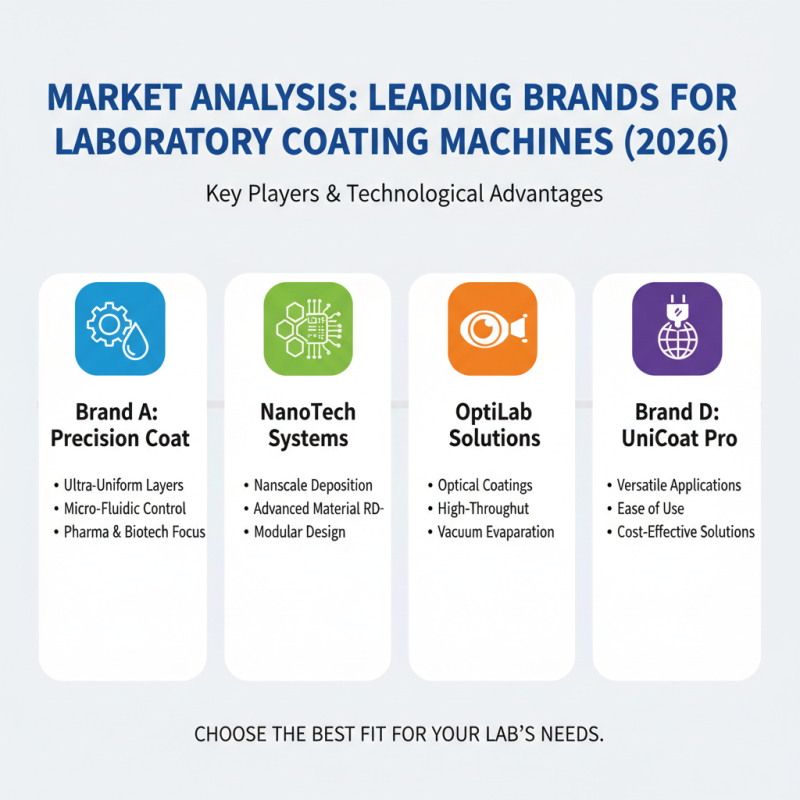
Market Analysis: Leading Brands for Laboratory Coating Machines in 2026
As the market for laboratory coating machines expands, understanding leading brands becomes crucial. These machines significantly enhance precision in various applications. Different brands offer specific advantages and unique technologies. Evaluating these options helps laboratories choose the machine that best fits their needs.
Prominent players in the market often focus on user-friendly interfaces and energy efficiency. Some machines excel in high throughput, while others prioritize versatility. For scientists, this means selecting equipment that aligns with workflow demands. However, not all machines deliver the same level of performance. Testing and validation are often needed in real-world applications.
While established brands are reliable, emerging companies may provide innovative solutions worth considering. Laboratories may find value in exploring lesser-known options. Effectively balancing cost with feature sets requires careful assessment. Continuous improvement in coating technologies reflects a dynamic market landscape. Understanding these trends can guide users toward well-informed decisions.
Future Innovations in Coating Materials and Their Impact on Efficiency
The world of laboratory coating machines is evolving rapidly. Future innovations in
coating materials promise to enhance efficiency significantly. According to a report by
MarketsandMarkets, the global market for coating materials is projected to grow from
$150 billion in 2021 to over $200 billion by 2026. This surge reflects a growing demand for advanced materials that offer better performance and sustainability.
Future materials, such as nanocoatings, are gaining traction.
These coatings can provide superior mechanical, thermal, and anti-corrosion properties. For instance, a study published in the Journal of Coatings Technology highlights that
nanocoatings can improve durability by up to 50%. However, challenges remain in the cost of production and scalability. Many laboratories struggle to implement such advanced materials cost-effectively.
Moreover, the integration of smart technologies with coating processes is emerging.
IoT-enabled machines can monitor real-time data, optimizing application techniques. Nevertheless, not every lab has adopted these technologies. The learning curve and the initial investment can deter smaller facilities. Addressing these challenges is crucial for the wider adoption of innovative coating solutions.
Exploring these innovations can lead to efficient practices and improved laboratory performance.