Top 5 Tips for Choosing an Aluminum Foil Coating Machine?
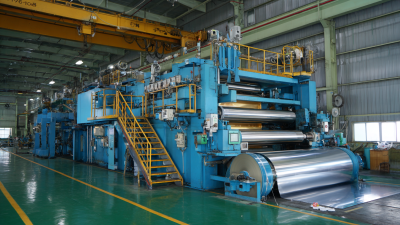
Choosing the right Aluminum Foil Coating Machine can significantly impact your production line. These machines play a crucial role in packaging and material protection. Selecting one requires careful consideration of several factors.
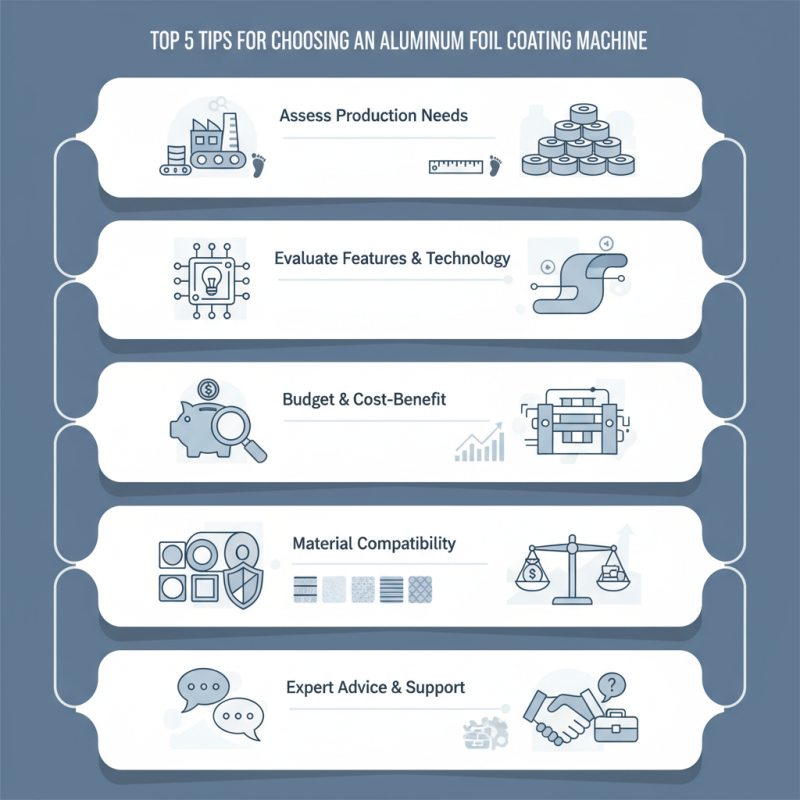
Your first step is to assess your production needs. Consider the scale of your operations and the volume of foil you handle. Different machines offer diverse capabilities. Some may cater to smaller, niche markets, while others handle large volumes efficiently. Don’t overlook the machine's size and footprint. It should fit well within your existing setup.
Next, you must evaluate the machine's features and technology. Look for innovations that enhance efficiency and reduce waste. However, there are trade-offs. A more advanced machine often comes with a higher price tag. That’s where careful budgeting becomes essential. Remember, the perfect choice may not exist. Reflect on your specific needs, and don’t be afraid to ask for expert advice.
Understanding Aluminum Foil Coating Processes and Their Applications
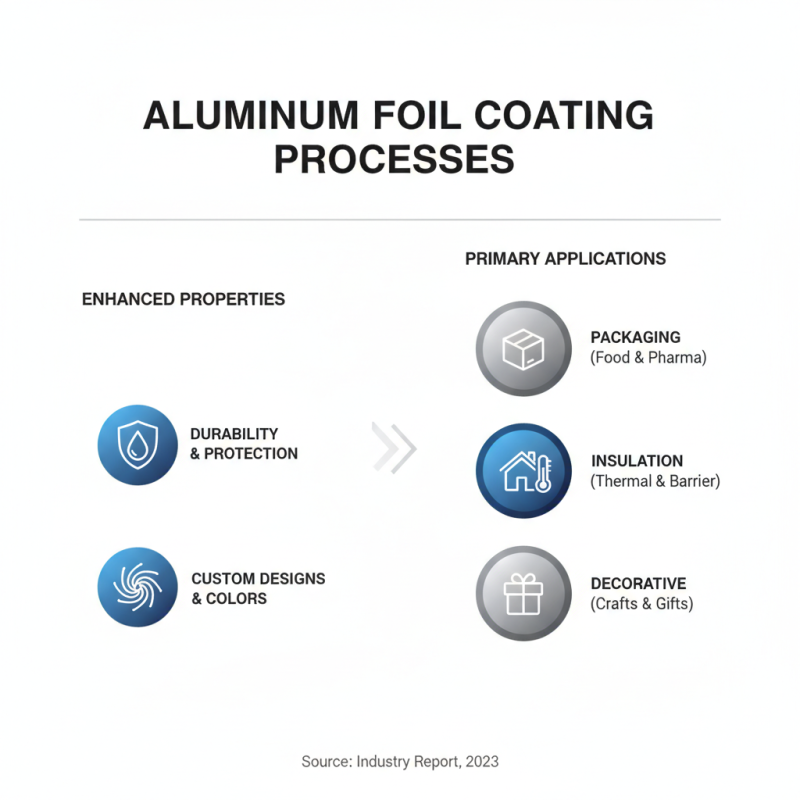
Aluminum foil coating processes are essential in various industries. These techniques aim to enhance the properties of aluminum foil. Coating can improve durability and resistance to moisture. It also allows for intricate designs and colors on the foil. The applications are vast—packaging, insulation, and even decorative purposes.
There are different methods to coat aluminum foil. Each method has its pros and cons. Some processes are more environmentally friendly but may lack efficiency. Others might produce better results but use harsh chemicals. Choosing the right method can be challenging. Factors like cost, quality, and intended use play a crucial role. Mistakes in selection can lead to product failures.
A clear understanding of the coating process is vital. Are the desired qualities being achieved? The industry often pushes for speed over quality. This can compromise the final product. Regular assessments can highlight areas that need improvement. Ensuring quality doesn't always align with lower costs. This balance is a common struggle for manufacturers.
Key Specifications to Consider When Selecting a Coating Machine
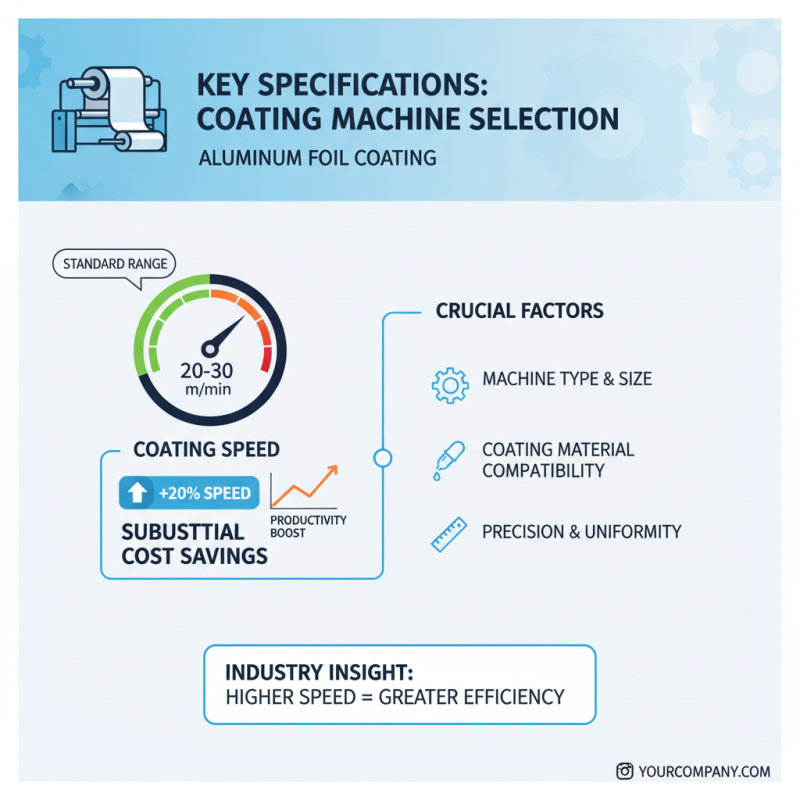
When selecting an aluminum foil coating machine, key specifications should guide your decision. One crucial aspect is the machine's coating speed. A standard speed ranges from 15 to 30 meters per minute. However, higher speeds can enhance productivity significantly. According to a recent industry report, a 20% increase in speed can lead to substantial cost savings over time.
Another factor to consider is the machine's versatility. Look for machines that can handle different coating weights and materials. Many models are limited to specific foil types. This restriction can lead to inefficiencies in production. Additionally, the coating thickness plays a vital role. Common thickness settings vary, but a range of 3 to 30 microns is typical. Precision is essential; the wrong thickness can compromise the product's quality.
Lastly, it's important to assess the technology used in the machine. Advanced features like automation can improve reliability and reduce labor costs. However, complex systems may require skilled technicians for maintenance. Striking the right balance between automation and ease of use is critical. Industry experts suggest that nearly 35% of businesses face challenges in adapting to new technologies. Weighing these factors carefully will enhance your decision-making process.
Evaluating Production Capacities: Output Rates and Efficiency Metrics
When choosing an aluminum foil coating machine, it is vital to assess production capacities. Output rates and efficiency metrics play a significant role. A 2023 market analysis revealed that machines with higher output rates can increase productivity by up to 25%. This means faster processing times, translating to lower operational costs.
Efficiency metrics are equally important. Machines that can maintain an operational efficiency of at least 90% tend to maximize profitability. This is critical in a market where margins are tight. However, variations in the quality of foil coating may occur when maximizing output. It raises questions about maintaining product standards while pushing for higher volumes.
Moreover, many facilities often face challenges with setup and changeover times. A review of industry benchmarks indicated that lengthy changeovers can diminish production efficiency by up to 15%. This gap between expectations and reality should provoke reflection. Striking a balance between speed and quality is essential for long-term success in foil coating operations.
Assessing Material Compatibility: Types of Aluminum Foil and Coatings
When selecting an aluminum foil coating machine, material compatibility is crucial. Different types of aluminum foil and coatings can affect the final product. For instance, some aluminum foils have surface treatments that may not bond well with certain coatings. This can lead to issues such as peeling or bubbling.
It's essential to understand the types of aluminum foil available. Some are untreated, while others receive special coatings, like plastic or lacquer. Each type behaves differently during the coating process. A machine might work well with one kind but struggle with another. Testing combinations in a controlled environment can yield insights into how different materials interact.
Keep in mind that not all machines are versatile. Some may excel in coating one type but are inefficient with others. Therefore, knowing your specific needs and the characteristics of your materials is vital. Consider running trials before making a final decision. Reflecting on these aspects can significantly influence your choice and ensure better production outcomes.
Cost Analysis: Budgeting for Equipment and Long-Term Maintenance Expenses
When budgeting for an aluminum foil coating machine, you need a clear understanding of costs. Initial investment is just part of the equation. Consider the cost of installation, training, and any necessary upgrades. These can quickly add significant expenses.
Don't overlook long-term maintenance. Regular servicing is essential to keep your machine running smoothly. Set aside funds for unexpected repairs and spare parts. These costs can accumulate over time. A machine may seem affordable now, but neglecting maintenance can lead to more serious and costly issues down the line.
Be realistic about your budget. What appears to be a great deal might require more resources than anticipated. Always factor in additional costs that may arise. Doing so reduces financial strain in the future. Create a comprehensive financial plan that encompasses both initial and ongoing expenses. This approach leads to better decision-making and sustainable operations.