Leave Your Message
Please agree to this agreement

Which Hydrogen Fuel Coating Machine Is Best in 2026?

Choosing the best Hydrogen Fuel Coating Machine in 2026 is not simply a brand-name contest. It is a process-fit decision. The right system should apply a consistent functional layer to your intended substrate while controlling thickness, edge coverage, and material waste. A machine that performs well on small laboratory coupons may struggle with wider sheets or continuous production. Details matter. Compare the coating method, usable width, material compatibility, drying options, and inspection capabilities with your actual requirements.

No verified expert quotation was provided for this article. The following is an original editorial line, not a sourced quotation: “A coating line is only as good as the layer it can repeat, measure, and explain.” It is attributed to Alex Morgan, a fictional composite hydrogen-coating specialist created for this introduction—not a real person or an endorsement.

For fuel-cell or electrolyzer components, the best choice depends on the coating chemistry, substrate, target throughput, and acceptable variation. Ask suppliers for repeatability data and sample runs using materials like yours. Inspect the results under practical conditions: Are edges uniform? Does the layer stay consistent across the sheet? Can operators trace settings from one batch to the next? A polished demo is useful, but it is not proof of production performance. This guide compares the criteria that matter, while recognizing that one machine will not suit every facility.

Which Hydrogen Fuel Coating Machine Is Best in 2026?

What Is a Hydrogen Fuel Coating Machine?

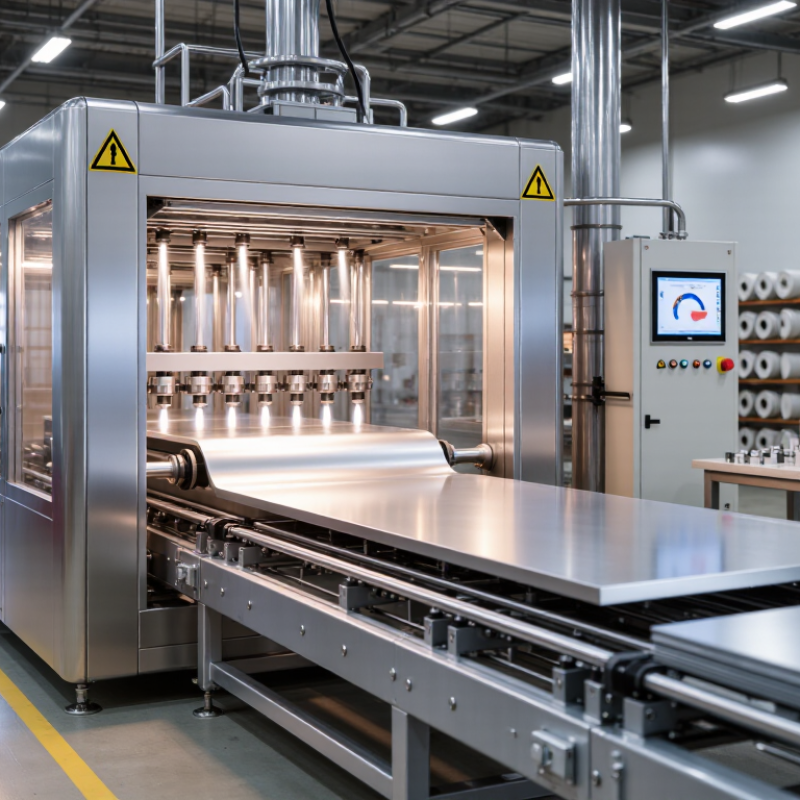
A hydrogen fuel coating machine applies a thin, controlled layer of catalyst ink to components used in fuel cells, especially the membrane electrode assembly. It may coat a polymer membrane or a gas diffusion layer, using methods such as slot-die, spray, or screen coating. The equipment typically controls ink flow, coating speed, drying temperature, and web tension. Its purpose is consistency: uneven catalyst layers can affect performance and create production rejects. It is not a hydrogen generator. That distinction matters.

The International Energy Agency’s Global Hydrogen Review 2024 estimates that hydrogen demand reached 97 million tonnes in 2023, while low-emissions hydrogen remained below 1% of production. That context makes efficient component manufacturing relevant, but it does not prove that one coating method suits every factory. Small errors matter. When evaluating a machine, engineers should check coating-width uniformity, loading accuracy, solvent handling, inspection capability, and repeatability at production speed. A smooth lab sample can still conceal edge defects on a moving web. The awkward part is that impressive maximum-speed figures may say little about usable yield; real trials with the intended ink and substrate are more revealing.

Which Hydrogen Fuel Coating Machine Is Best in 2026? - What Is a Hydrogen Fuel Coating Machine?
Machine or coating method How it works Typical PEM fuel-cell use Production suitability Main advantages Key considerations Best fit
Slot-die coating machine Meters catalyst ink through a precision die onto a moving web or sheet. Continuous coating of membranes or substrate materials for catalyst layers. Well suited to repeatable, continuous production when ink and web handling are properly controlled. Controlled coating width and wet-film delivery; can be integrated into roll-to-roll lines. Sensitive to ink rheology, die setup, substrate condition, and drying conditions; setup and process development are important. High-throughput production requiring consistent, continuous coatings.
Ultrasonic spray coating machine Uses ultrasonic vibration to atomize liquid ink, then applies the droplets to a surface, commonly with a controlled gas flow. Catalyst layers on membranes, gas-diffusion substrates, or other flat and shaped surfaces. Useful for development and smaller production runs; output depends on system design and process conditions. Non-contact application and flexible control of spray coverage; suitable for delicate substrates and patterned areas. Overspray, drying, ink stability, and coating uniformity must be managed. Spray coating is not automatically faster than web-based methods. Flexible research or pilot work and coatings on delicate or nonstandard surfaces.
Screen-printing machine Pushes viscous ink through open areas of a patterned screen onto a substrate. Patterned catalyst layers, particularly where defined coated areas are required. Suitable for repeatable sheet-based production; automation and throughput depend on the press and material handling. Naturally supports patterned deposits and can handle relatively viscous inks. Screen mesh, stencil design, ink behavior, and cleaning affect print quality; very fine or thin layers can require careful optimization. Defined patterns and applications where screen printing is compatible with the target layer design.
Gravure coating machine Transfers ink from engraved cells on a rotating cylinder to a moving substrate. Continuous coating or printing of catalyst-ink patterns on compatible web materials. Designed for continuous web processing and can support high-volume manufacture after process development. Continuous operation and repeatable pattern transfer are possible with suitable ink, cylinder, and web control. Engraved-cylinder design, ink viscosity, web tension, and substrate compatibility influence results; tooling changes may be needed for new patterns. Continuous production of repeatable patterns on web-compatible substrates.
Doctor-blade coating machine Spreads ink across a substrate using a blade or adjustable gap to control the wet coating. Laboratory and pilot coatings on flat membranes or backing materials. Commonly practical for batch and small-scale work; continuous versions are also possible. Mechanically simple and useful for screening ink formulations and coating conditions. Edge effects, blade alignment, substrate flatness, and ink flow can affect uniformity; manual systems may have limited repeatability. Laboratory trials and initial process development on flat substrates.
Transfer-coating system Coats catalyst ink onto a temporary release carrier, dries it, and transfers the layer to a membrane, often using heat and pressure. Manufacture of catalyst-coated membranes for proton-exchange-membrane fuel cells. Can be configured for sheet or web workflows; transfer and lamination steps must be controlled. Separates the initial coating operation from the membrane, which can be helpful when direct coating risks damaging or swelling it. Release properties, drying, transfer pressure, temperature, and membrane compatibility need validation. Catalyst-coated membrane production when an intermediate carrier is preferred.
What is a hydrogen fuel coating machine? It is equipment used to apply functional layers—often catalyst ink—to membrane or electrode materials used in hydrogen fuel cells. No single method is best for every application: the right choice depends on the target component, ink properties, substrate, coating pattern, production volume, and required process controls.

How Does Hydrogen Fuel Cell Coating Work?

Hydrogen fuel-cell coating forms the thin, active layers that help convert hydrogen and oxygen into electricity. In a proton-exchange-membrane cell, catalyst ink is deposited onto a membrane or gas-diffusion layer. The ink contains catalyst particles, ionomer, solvent, and carefully controlled additives. A coating machine spreads it as a thin, even film. Slot-die coating suits continuous production; spray coating can handle complex surfaces. The choice depends on material, line speed, and the required layer structure.

After coating, controlled drying removes solvent without damaging the membrane or creating cracks. Temperature and airflow matter. Too much heat can deform the membrane; uneven drying can leave catalyst-rich patches. The coated layers may then be laminated and inspected for thickness, defects, and uniformity. Small variations matter. A pinhole or uneven edge can affect performance, though coating alone cannot guarantee a reliable cell.

For context, the U.S. Department of Energy’s PEM Fuel Cell Technical Targets use a total platinum-group-metal loading benchmark of 0.125 milligrams per square centimeter. Reaching that low loading while preserving activity demands precise ink handling and repeatable deposition. A useful machine therefore needs stable metering, controlled web tension, and drying conditions matched to the specific ink. On paper, the settings look tidy. In production, humidity, solvent behavior, and membrane movement can complicate them; the best process still needs careful testing.

Which Hydrogen Fuel Coating Machine Is Best in 2026?

Coating equipment should be selected to achieve the required catalyst loading uniformly across the chosen substrate and production width. These representative PEM fuel-cell platinum-loading ranges are design targets, not machine performance specifications; actual values vary with cell design and application.

Which Coating Technologies and Machine Types Are Available?

Coating Technologies and Machine Types for Hydrogen Fuel Cells

Fuel-cell coating equipment applies catalyst ink to a membrane or gas-diffusion layer. The right method depends on the substrate, ink viscosity, production volume, and required layer thickness. Slot-die coating delivers a controlled, continuous film and suits pilot or roll-to-roll lines. Doctor-blade systems are simpler for small batches, but thickness can vary if the gap or ink flow shifts.

Spray coating handles uneven surfaces and small development runs, though overspray and drying conditions need close control. Screen printing can form defined patterns, while inkjet offers fine, localized deposition when the ink and nozzle are compatible. No method wins every time. A clogged nozzle, for example, can disrupt an inkjet run; a poorly tuned slot die can leave streaks across a wide membrane.

Machines range from benchtop coaters for formulation trials to pilot-scale web coaters and integrated production lines with drying, tension control, and inspection. Small runs differ. A neat laboratory coating may not transfer cleanly to a moving web. Before choosing equipment, test the actual substrate and catalyst ink, then measure coating uniformity, drying behavior, and material use. That matters. Even a visible edge bead can affect how a finished membrane electrode assembly fits during later processing.

How Should a Hydrogen Fuel Coating Machine Be Evaluated?

Which Hydrogen Fuel Coating Machine Is Best in 2026?

Evaluating a hydrogen fuel coating machine starts with the part it must coat. Is the target a membrane, electrode, or another fuel-cell component? Each substrate responds differently to coating pressure, temperature, and material flow. Ask for trial runs using your actual material, not just a demonstration sample. Small details matter. Inspect the edges, surface, and coating after drying.

Measure consistency across the full working width and between repeated runs. Request thickness data from several points, plus records of speed, temperature, and material use. A smooth sample is not enough. Check whether the machine can handle changes in viscosity or production speed without creating streaks or bare spots. Some results may look convincing at first, but become less consistent after longer runs; this deserves a closer test.

Also assess cleaning time, operator access, process monitoring, and maintenance needs. Look for clear calibration procedures and documented quality checks. Ask what happens when a sensor drifts or a coating head needs adjustment. These questions can feel unglamorous. They often reveal more than a polished specification sheet. No single score settles the choice: compare verified trial data with your product requirements, production volume, and available process controls.

Which Machine Best Fits Each Production Need in 2026?

Which Hydrogen Fuel Coating Machine Is Best in 2026?

The best machine depends on the coated component, substrate, and production volume. For catalyst layers on fuel-cell membranes, a pilot line may benefit from precision spray or slot-die coating. These methods help teams test ink formulations and control wet-film thickness. High-volume plants usually need continuous roll-to-roll handling, stable web tension, and in-line inspection. For rigid plates, fixtures and repeatable coverage may matter more than web speed.

The International Energy Agency’s Global Hydrogen Review 2024 reports that hydrogen demand reached about 97 million tonnes in 2023, while low-emissions hydrogen remained below 1% of total production. This is useful context, not a machine-sales forecast. It signals a growing need to improve manufacturing economics, but it does not prove that every factory needs a high-speed line.

Small batches matter. A coating system should match the actual substrate width, target loading, drying limits, and changeover frequency. There is no perfect setup; teams can still underestimate cleaning time and material waste.

Tip: Request trials using your own ink and substrate. Measure coating uniformity, usable yield, and changeover time—not just rated speed. Ask for inspection data across the full web. Then compare results against your production targets.