China Top 10 Wire Rod Coater Machine Manufacturers
China has become a major source of wire processing equipment, supported by strong metalworking, automation, and export manufacturing capabilities. This article examines China’s top 10 Wire Rod Coater Machine manufacturers and the practical strengths behind their market positions. The review considers coating consistency, production speed, material compatibility, machine control, and after-sales support.
Performance matters most.
A reliable machine should maintain stable coating thickness while wire moves through rollers, tanks, drying sections, and take-up systems. Small variations can affect adhesion, surface appearance, and downstream forming quality. Experienced buyers should inspect sample output, not only brochures. Factory visits, customer references, and trial runs can reveal details that specifications miss.
The selection also considers engineering experience, customization ability, safety design, and documentation quality. Manufacturers with clear electrical diagrams, maintenance schedules, and spare-parts support usually reduce operational uncertainty. However, “top” does not mean perfect. Some suppliers may offer excellent automation but limited overseas service. Others may provide competitive pricing while requiring closer technical supervision. These differences deserve careful reflection.
This guide is intended for procurement teams, plant managers, and technical engineers comparing Chinese suppliers. It does not replace independent testing or contract review. Buyers should verify coating materials, wire diameter ranges, line speed, power requirements, certifications, and installation responsibilities before placing an order. A promising machine may still perform poorly if its configuration does not match the production line. Careful comparison remains essential.
What Is a Wire Rod Coater Machine?
What Is a Wire Rod Coater Machine?
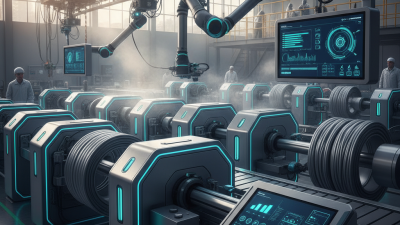
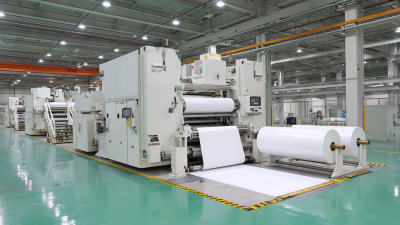
A wire rod coater machine applies a controlled protective or functional layer to metal wire rods. It usually combines cleaning, coating, drying, and tension control in one production line. The coating may improve corrosion resistance, surface lubrication, electrical performance, or later drawing efficiency. In practical use, operators feed continuous wire through guides, treatment tanks, rollers, or spray chambers. Sensors monitor speed, temperature, coating thickness, and line tension. A stable process matters because small variations can create uneven surfaces or weak adhesion.
Different machines use different coating methods. Immersion systems offer thorough coverage, while spray systems can reduce material waste and support faster adjustments. The correct choice depends on rod diameter, material type, coating chemistry, output targets, and factory space. Experienced technicians also inspect viscosity, drying time, and roller wear. A machine can look efficient on paper. Real production may disagree. This is where testing becomes essential.
Tips: Check the wire path before purchasing. Ask for sample trials with your actual rod size and coating material. Measure thickness at several points, not only at the center. Review cleaning access, emergency controls, spare parts, and operator training. Keep records of speed, temperature, and defects. These details reveal whether the equipment remains reliable during long production runs. Some suppliers may promise high capacity, but capacity without consistent quality has limited value.
China Top 10 Wire Rod Coater Machine Manufacturers - What Is a Wire Rod Coater Machine?
Anonymized technical benchmark of commonly offered wire rod coating machine configurations. Values are representative industry ranges and should be confirmed against the supplier’s technical quotation.
Wire Rod Coater Machine Comparison Table
| Profile |
Typical Application |
Compatible Rod Diameter |
Typical Line Speed |
Coating Material |
Coating Method |
Temperature Control |
Estimated Output Range |
Main Strength |
| 01 |
General-purpose wire production |
1.6–5.5 mm |
20–80 m/min |
Zinc, copper, or tin |
Continuous dip coating |
PID controlled |
0.3–2.5 t/h |
Balanced cost and flexibility |
| 02 |
High-speed galvanized wire |
1.8–4.5 mm |
60–150 m/min |
Molten zinc |
Flux-assisted hot-dip coating |
Automatic closed-loop |
1.0–4.0 t/h |
High throughput |
| 03 |
Fine wire and precision coating |
0.8–2.5 mm |
30–120 m/min |
Tin, nickel, or copper |
Electroplating or micro-dip coating |
Multi-zone PID |
0.1–1.0 t/h |
Stable coating thickness |
| 04 |
Low-carbon steel wire |
2.0–6.0 mm |
25–90 m/min |
Zinc-aluminum alloy |
Hot-dip alloy coating |
PID with immersion sensor |
0.5–3.0 t/h |
Improved corrosion resistance |
| 05 |
Spring and high-tensile wire |
2.5–7.0 mm |
15–70 m/min |
Zinc or phosphate |
Dip coating with controlled wiping |
Digital temperature display |
0.4–2.2 t/h |
Gentle wire handling |
| 06 |
Multi-wire parallel processing |
1.2–4.0 mm |
30–100 m/min |
Zinc or copper |
Parallel dip coating |
Independent zone control |
1.0–5.0 t/h |
Higher output per floor area |
| 07 |
Batch and small-lot production |
1.0–5.0 mm |
10–50 m/min |
Zinc, tin, or polymer |
Modular dip or spray coating |
Manual or semi-automatic |
0.1–1.2 t/h |
Low initial investment |
| 08 |
Continuous coil-to-coil production |
2.0–6.5 mm |
50–130 m/min |
Zinc or zinc alloy |
Continuous line coating |
PLC and closed-loop |
1.2–4.5 t/h |
Reduced changeover time |
| 09 |
Energy-conscious production |
1.5–5.0 mm |
20–90 m/min |
Zinc or water-based polymer |
Insulated dip or spray coating |
Inverter-controlled heating |
0.3–2.8 t/h |
Lower heat loss and operating cost |
| 10 |
Automated industrial production |
1.8–6.0 mm |
40–140 m/min |
Zinc, copper, tin, or alloy |
Automated dip coating with air wiping |
PLC, HMI, and data logging |
0.8–4.5 t/h |
Process traceability and automation |
What is a wire rod coater machine?
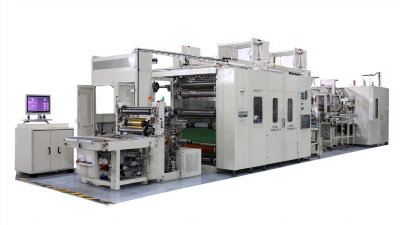
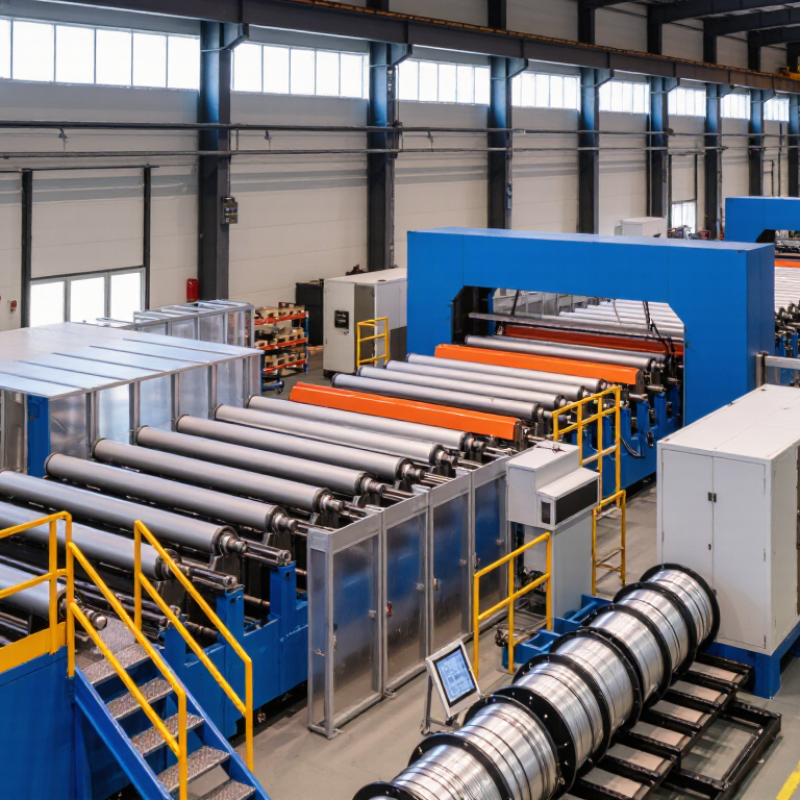
A wire rod coater machine is a continuous production system that applies a controlled layer of metal, alloy, chemical, or polymer coating to steel or non-ferrous wire rod. A typical line may include pay-off equipment, surface cleaning, fluxing or pretreatment, a coating bath or spray unit, wiping or sizing equipment, cooling, take-up, and process-control systems.
China’s Top 10 Wire Rod Coater Machine Manufacturers
China’s Top 10 Wire Rod Coater Machine Manufacturers serve demanding cable, spring, and metal processing markets. Their machines typically combine payoff units, cleaning systems, coating tanks, drying sections, and take-up controls. Experienced manufacturers understand that stable tension matters as much as coating speed. A small tension change can create uneven thickness, surface marks, or wire breaks.
The strongest suppliers usually provide tested layouts, process trials, and practical commissioning support. Buyers should examine coating uniformity, line speed, material compatibility, and spare-part access. Stainless steel contact parts may improve durability in corrosive environments. Accurate temperature control also protects coating quality during continuous production. Factory visits can reveal details that brochures often miss, such as noisy gearboxes, poor cable routing, or weak guarding. These details matter. Some machines look efficient but require frequent manual adjustment. That is an uncomfortable point worth checking.
Tips: Request sample coating results using your actual wire diameter and material. Ask for production records, maintenance schedules, and operator training plans. Confirm whether the control system supports recipe storage and fault tracking. Measure energy use during a real trial, not only at idle. It is also wise to inspect cleaning access, because residue can build around tanks and rollers. No supplier is perfect, and even a well-designed line may need process tuning after installation. A careful comparison should include technical support, documentation quality, delivery reliability, and long-term operating costs.
China’s Top 10 Wire Rod Coater Machine Manufacturers
This industry reference chart compares commonly specified maximum line speeds for ten wire-coating machine configurations. The figures are indicative engineering ranges based on coating process requirements, wire diameter, coating material, and line design; they are not company-specific rankings or manufacturer performance claims.
Factors to Consider Before Choosing a Manufacturer
Choosing a wire rod coater machine manufacturer requires more than comparing prices.
Start with the coating materials, wire diameters, production speed, and required surface finish. A manufacturer with relevant experience should explain how its machine handles tension, heating, cooling, and coating thickness. Ask for real production data, not only attractive brochures.
Tips:
Request a sample test using your own wire and coating material. Inspect the finished surface under bright light. Look for pinholes, uneven edges, and excess buildup. Measure coating thickness at several points. Small variations can create serious downstream problems. See the line running.
Check the machine’s control system, energy use, spare-part access, and cleaning requirements. Reliable suppliers provide drawings, manuals, training, and a clear commissioning plan. Speak with previous customers about response times and maintenance support.
A low purchase price may become expensive if downtime lasts for days. Warranty terms also deserve careful reading. Some promises sound broad but lack measurable limits.
Ask what is covered, how quickly technicians respond, and which parts are excluded. Consider factory inspection, quality records, and compliance with applicable safety standards.
Trust grows through evidence. It does not come from polished language alone.