Why Choose a Double-Sided Coating Machine?
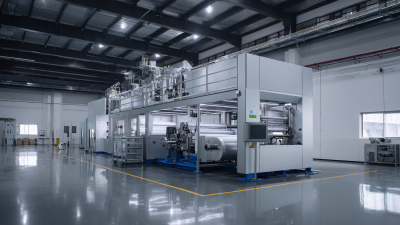
A Double-Sided Coating Machine applies functional layers to both sides of a moving web. This design can reduce handling, alignment errors, and production time. It is increasingly relevant for flexible packaging, battery materials, specialty films, and technical textiles.
Smithers’ report, The Future of Flexible Packaging to 2028, identifies lightweight structures, barrier performance, and material efficiency as major market priorities. Grand View Research also links coating equipment demand with expanding flexible packaging and advanced battery applications. These trends create a practical question: can one coating line deliver consistent coverage without adding unnecessary complexity?
Dr. Edward D. Cohen, co-author of Modern Coating and Drying Technology, states, “Coating is a process, not simply a layer placed on a web.” That principle matters on both sides. Operators must control viscosity, tension, drying temperature, web speed, and registration. A small tension change can create wrinkles or uneven edges. The result may appear acceptable under factory lights, then fail during lamination.
The benefits are clear.
However, double-sided equipment is not automatically better. It requires skilled setup, reliable sensors, and disciplined maintenance. The wrong configuration can increase waste instead of reducing it. AIMCAL technical guidance repeatedly emphasizes process control and trial validation for roll-to-roll coating systems.
This article examines where a Double-Sided Coating Machine creates measurable value. It also considers its limitations, operating risks, and suitability for different production environments. The honest answer depends on the substrate, coating chemistry, and required output—not marketing claims alone.
Why Choose a Double Sided Coating Machine?
Double-Sided Coating Machines: Definition, Layouts, and 2× Surface Coverage
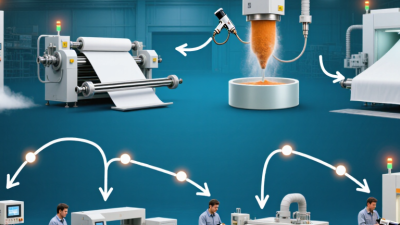
A double-sided coating machine applies functional slurry to both faces of a moving foil. This layout can use simultaneous coating or two controlled coating passes. The machine may run vertically, horizontally, or through a compact tandem path. Each arrangement changes drying distance, web tension, and inspection access.
The appeal is clear: one foil pass can create nearly 2× surface coverage. That can reduce handling steps, floor space, and alignment risk. However, 2× coverage does not mean 2× finished output. Drying capacity often becomes the bottleneck. A thicker wet layer also demands tighter temperature control and airflow balance.
The International Energy Agency’s Global EV Outlook 2024 reported more than 750 GWh of battery demand from electric vehicles in 2023, up about 40% year on year. That growth increases pressure on electrode lines to improve productivity without sacrificing coating uniformity. Practical trials should measure loading deviation, edge quality, residual moisture, and defect rates.
A useful layout is not always the fastest one. Operators still need safe access. Waste matters. DOE manufacturing research also highlights energy intensity as a major battery-production challenge, especially during solvent removal and drying. For this reason, engineers should compare total energy per coated square metre, not only line speed. The 2× promise looks attractive, but it needs plant-level evidence.
| Dimension | Single-Sided Coating Machine | Double-Sided Coating Machine | Practical Significance |
|---|---|---|---|
| Basic Definition | Applies a coating to one surface of a continuous web during one coating pass. | Applies coating to both surfaces of a continuous web, either in one integrated line or through two coordinated coating stages. | The exact configuration depends on the substrate, coating chemistry, and drying requirements. |
| Surface Coverage per Pass | One web surface is treated per pass. | Two web surfaces can be treated within the same production sequence. | This is the basis of the “2× surface coverage” advantage; it does not automatically mean 2× line speed. |
| Typical Web Path | The web usually travels through one coating head and one or more drying zones. | The web passes through two coating stations, commonly with intermediate drying, turning bars, rollers, or a reversing path between sides. | Web routing must prevent contact with wet coating and maintain stable alignment. |
| Common Layouts | In-line coating and drying; reverse-roll, gravure, slot-die, knife, or curtain-coating arrangements may be used. | Tandem in-line layout, sequential two-pass layout, or a compact configuration using web-turning technology. | Layout selection is influenced by floor space, drying capacity, coating viscosity, and web sensitivity. |
| Production Sequence | Unwind → coat one side → dry or cure → rewind or continue to the next process. | Unwind → coat and dry the first side → reverse or redirect the web → coat and dry the second side → rewind or convert. | Integrated processing can reduce handling between the two coating operations. |
| Productivity Potential | Suitable when only one surface requires treatment or when separate processing is preferred. | Can reduce the number of separate web-processing passes when both sides require coating. | Actual productivity depends on coating weight, drying load, line speed, changeover time, and inspection requirements. |
| Drying and Curing Demand | Drying capacity is sized for one wet coating layer per production pass. | Requires sufficient drying or curing capacity for two coating operations and may require independent control of each side. | Water-based, solvent-based, UV-curable, and heat-sensitive systems have different process demands. |
| Coating Uniformity | Control focuses on one coating head, one wet-film profile, and one coated surface. | Requires coordinated control of coating weight, cross-web profile, edge quality, and surface defects on both sides. | Independent metering and inspection systems help maintain consistent two-sided performance. |
| Web Tension Control | Tension management is generally simpler because the web has fewer coating and turning stages. | Requires synchronized tension control across coating, drying, turning, and rewinding sections. | Stable tension helps limit wrinkles, telescoping rolls, dimensional change, and registration errors. |
| Risk of Surface Contact | The main risk is contact with the freshly coated side before adequate drying or curing. | Both coated surfaces must be protected from rollers, guides, and other contact points while wet or tacky. | Non-contact drying and appropriate web-turning methods can reduce marking and blocking. |
| Material Efficiency | Lower process complexity can simplify setup and reduce waste when only one side is coated. | May reduce waste associated with repeated unwinding, threading, and intermediate roll handling when both sides need coating. | Material savings depend on setup procedures, defect rates, splice management, and coating formulation. |
| Typical Applications | Release liners, decorative films, labels, packaging webs, and substrates requiring a functional layer on one side. | Battery electrode production, barrier films, specialty papers, technical textiles, separator materials, and substrates requiring functional layers on both sides. | The best choice depends on whether the final product needs symmetrical or different functions on each surface. |
| Different Coatings on Each Side | Usually requires separate processing or an additional coating line for the opposite side. | Can apply the same coating or two different coatings, provided the equipment supports independent formulation and process control. | Different coatings may require separate drying temperatures, airflows, solvent handling, or curing conditions. |
| Quality-Control Requirements | Inspection generally focuses on one coated surface, including coat weight, appearance, adhesion, and defects. | Inspection may include coat weight, thickness, adhesion, surface energy, appearance, and defect detection on both sides. | In-line measurement can identify side-to-side variation before the material reaches rewinding. |
| Main Advantages | Simpler layout, easier operation, lower initial complexity, and efficient processing for one-sided products. | Two-sided processing, fewer intermediate handling steps, better line integration, and potential improvement in total output for two-sided products. | The benefit is greatest when both sides must be coated to comparable production standards. |
| Main Limitations | A second coating pass may be needed for two-sided products, increasing handling, setup, and processing time. | Higher equipment complexity, greater drying demand, more demanding tension control, and potentially higher capital and maintenance requirements. | A total-cost evaluation should include energy, labor, waste, maintenance, and required production capacity. |
| Best Selection Criteria | Choose when the product is one-sided, production volume is moderate, or process simplicity is the priority. | Choose when both surfaces require coating and integrated two-sided production can offset the added equipment and process complexity. | Compare required output, coating specifications, substrate behavior, available floor space, and future product plans. |
A double sided coating machine earns its value through one-pass throughput. At 100–300 m/min, the web receives both functional layers before rewinding. That can remove one coating cycle, one setup, and one handling stage. It also reduces the risk of registration drift between separate passes.
Consider a 200 m/min line processing a 1.2-metre web. It covers 240 square metres each minute. With 10 g/m² of dry coating on each side, one-pass production deposits about 4.8 kilograms of dry material per minute. A two-pass process must repeat web handling and drying, even when the coating weight stays unchanged. The arithmetic is clean. Production rarely is.
Industry benchmarking from AIMCAL technical papers places 100–300 m/min within the practical range for many continuous web-coating applications. Smithers’ market research on functional and barrier coatings also identifies higher-speed converting as a major productivity driver. However, speed alone does not prove efficiency. Drying capacity, tension control, viscosity stability, and defect inspection can limit real output. A line running at 300 m/min may deliver less saleable material than one running at 180 m/min.
Energy demand deserves closer attention. A double sided system can shorten oven exposure per finished roll, but it may require stronger air handling and more precise thermal control. Operators should compare saleable square metres per hour, not headline speed. They should also record waste, cleaning time, coating uniformity, and moisture after drying. Those details expose the uncomfortable gap between catalog performance and factory performance.
A double sided coating machine applies functional layers to both sides of a web in one controlled process. Its value becomes clear when thickness matters. Operators can target layers from 1 to 100 μm, depending on material, coating method, and product design. Accurate gap settings, stable web tension, and measured slurry flow support this range. Coat-weight uniformity of ±1–2% can reduce weak spots, excess material, and later rejection. That precision is not automatic. It depends on calibration, clean coating heads, and steady environmental conditions. Small changes in viscosity can shift the result.
In practical use, technicians check samples across the web width, not only at the center. A digital thickness gauge may reveal a thin edge near the roll shoulder. They then adjust pressure, speed, or flow in small increments. Both sides can be aligned for balanced performance and fewer handling steps. This can improve adhesion, barrier behavior, or electrical consistency, depending on the application. Yet specifications can look better than reality. Dust, uneven drying, and worn rollers still create variation. A reliable process records temperature, humidity, line speed, and coat weight for every run. Experience helps, but it should not replace measurement. The machine is powerful; the process still needs honest verification.
A double sided coating machine applies functional layers to both web surfaces within one coordinated process. This reduces rewinding, rethreading, and repeated web alignment. Fewer handling steps mean fewer opportunities for wrinkles, scratches, and edge damage. It also shortens the production route. That matters when every extra pass consumes labor, floor space, and inspection time.
Drying economics can improve as well. One combined pass may avoid drying the web twice, especially when both coatings use similar formulations. The actual saving depends on coat weight, solids content, line speed, and dryer efficiency. It is not automatic. A heavier coating can still demand substantial heat and airflow.
Metering energy use per finished square meter gives a clearer answer than relying on machine capacity alone.
Material waste often falls during setup. Operators can reduce trial lengths, registration adjustments, and startup scrap. Less rewinding also means fewer damaged rolls and fewer discarded cores. However, a defect affecting both sides may increase the loss from one event. That risk deserves serious trial work.
Track coating weight, scrap meters, drying energy, and changeover time across several runs. The numbers may challenge initial expectations, which is useful. A sound investment decision should reflect real production conditions, not only impressive specification sheets.
Choosing a double sided coating machine begins with the web width. The machine must support the material without excessive edge movement or wasted trim. A narrow web on an oversized line may reduce efficiency. A wider web than the machine allows can create unstable coating edges. I have found that real production width matters more than a brochure’s maximum width. Leave practical space for splices, inspection, and future material changes.
Viscosity affects pumps, coating weight, and surface uniformity. Measure it at process temperature, not only in the laboratory. Drying capacity also needs careful attention. Two coated sides can demand more heat, airflow, and residence time than expected. Check whether the dryer handles the solvent or water load without damaging the substrate. Tension control within 0.1% of the set value sounds precise, but it depends on sensors, rollers, calibration, and material elasticity. Thin films may wrinkle when tension changes slightly. Thick films may respond more slowly. That difference is easy to underestimate. A controlled trial with the actual substrate, coating fluid, and target speed remains essential. Test records should include web width, viscosity, dryer temperature, line speed, and tension variation. Some early assumptions will probably fail. That is useful evidence, not wasted effort.