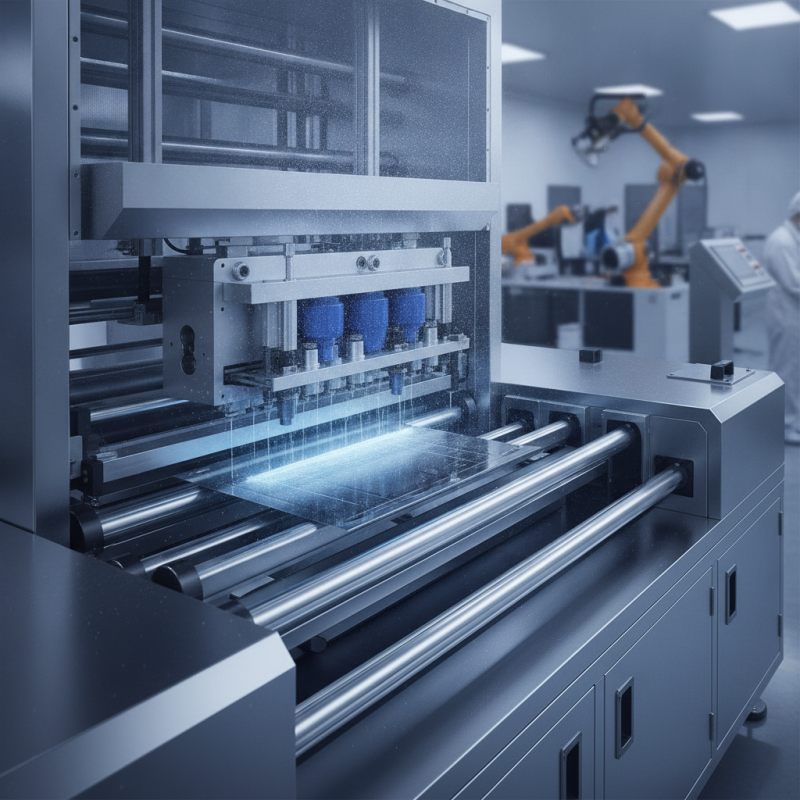
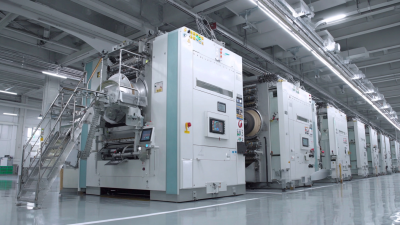
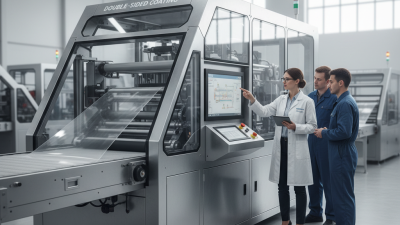
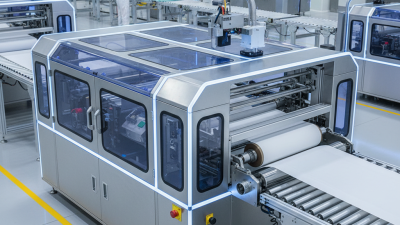
The Double-Sided Coating Machine has become a pivotal component in various industries, including electronics, automotive, and packaging. According to a recent report by MarketsandMarkets, the global market for coating equipment is expected to reach $21 billion by 2026, highlighting the growing demand for efficient coating solutions. Expert Dr. Emily Zhang, a leading figure in the coating technology field, states, "The future of manufacturing relies heavily on advanced coating technologies like the Double-Sided Coating Machine."
This machinery is designed to apply coatings evenly on both sides of substrates, enhancing product performance and durability. Industries benefit greatly from this technology, as it reduces waste and improves application speed. For instance, in electronics, double-sided coatings allow efficient production of circuit boards, leading to better electronic performance.
Despite the advantages, challenges still exist within the industry. Some manufacturers struggle with maintaining consistency in coating thickness across different materials. Additionally, the initial investment for advanced machines can be significant. As the demand for precision and efficiency grows, addressing these issues becomes crucial for sustaining innovation in the Double-Sided Coating Machine sector.
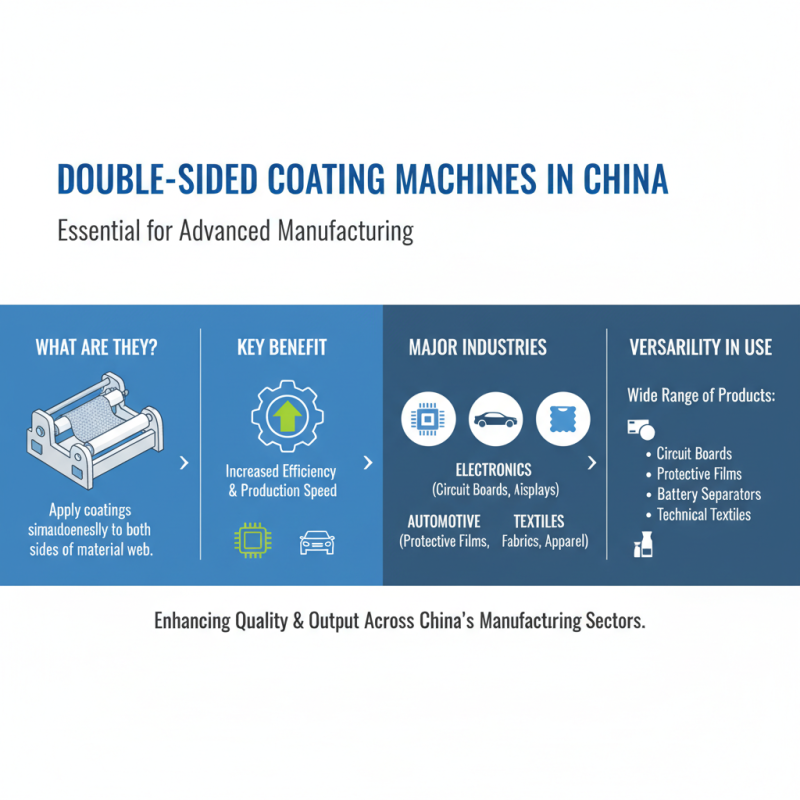
Double-sided coating machines have become essential in various industries across China. These machines allow for efficient coating on both sides of materials, significantly enhancing the production process. Industries like electronics, automotive, and textiles utilize these machines to create high-quality products. Their versatility plays a crucial role in the manufacturing of items ranging from circuit boards to protective films.
The technology behind double-sided coating is innovative yet complex. These machines utilize different techniques such as slot-die coating and gravure coating to ensure even distribution of materials. This precision is vital for maintaining product integrity. However, challenges persist. For instance, achieving uniform thickness across varying speeds can be difficult. Operators must have expertise to adjust parameters effectively for optimal performance.
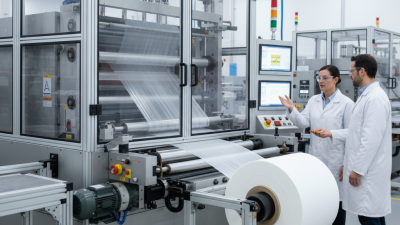
Many manufacturers face issues with maintenance and downtimes. Regular inspections and timely troubleshooting are necessary. Inadequate training also contributes to inefficiencies in the coating process. Continuous learning and adaptation are needed to overcome these obstacles, ensuring machines operate at peak efficiency while producing reliable, high-quality outputs.
Double-sided coating machines
are essential in various industries, especially in electronics and packaging. These machines provide uniform coating on both sides of a substrate, enhancing product quality. Their precision ensures that inks, adhesives, or functional coatings are applied evenly, leading to improved performance.
Key features
of these machines often include adjustable speed settings, allowing for different production needs. Many have automated systems for consistent quality. Additionally, advanced temperature control is crucial. It ensures that coatings cure properly, reducing defects. Some machines also feature user-friendly interfaces, making operation easier for technicians.
Challenges
However, implementing double-sided coating technology comes with challenges. Calibration can be complex and may require expert intervention. Maintenance is vital to avoid breakdowns. Moreover, the initial investment can be significant, prompting companies to evaluate their long-term needs carefully. This balancing act between cost and efficiency is an ongoing consideration for many manufacturers.
Double-sided coating machines play a crucial role in various industries. They are widely used in the production of items requiring a uniform coating on both sides. Common applications include electronics, automotive components, and consumer goods. A recent industry report highlighted that the double-sided coating market is expected to grow at a CAGR of 6% from 2023 to 2028. This growth reflects the increasing demand for high-quality coatings that enhance both performance and durability.
In the electronics sector, double-sided coating machines are essential for applying protective layers to circuit boards. This process ensures reliability and longevity. In the automotive industry, these machines help with coatings on parts like mirrors and other components that require seamless protection. Additionally, the packaging industry utilizes double-sided coating for improved adherence and performance of labels and seals. The versatility of these machines is notable, but challenges exist. Achieving equally distributed coating across both sides can be tricky and requires continuous optimization.
Opportunities lie in the development of more eco-friendly materials. As manufacturers face pressure to reduce environmental impacts, sustainable coatings will become a priority. However, transitioning to new materials can pose challenges for existing processes. It may require retooling or reengineering machines to meet new standards. The industry faced some setbacks during this transition phase. Despite the challenges, the demand for double-sided coatings shows no signs of slowing down.
Double-sided coating technology is revolutionizing various industries. This method enhances product quality and efficiency. It allows for uniform application on both sides of a substrate. Reports suggest that nearly 25% of manufacturers are shifting to this technology for improved production processes. The advantages are clear.
One significant benefit is improved material utilization. Traditional single-sided coating often results in wastage. In contrast, double-sided coating minimizes this loss. A study showed that 15% more material is efficiently utilized. This is crucial for businesses focusing on sustainability. Additionally, these machines often operate at higher speeds. This leads to shorter production cycles, boosting overall productivity.
Adopting double-sided coating machinery can be challenging. Initial costs can be high, and training is needed for operators. However, many companies report increased customer satisfaction. Higher quality products lead to stronger market positions.
They need to consider the trade-offs, especially in initial investment and training. The transition may pose challenges, but the long-term benefits often outweigh these concerns.
| Feature | Details |
|---|---|
| Type | Automatic Double Sided Coating Machine |
| Coating Materials | Polyester, Polyurethane, Epoxy |
| Production Speed | 20-100 meters/minute |
| Applications | Textile, Electronics, Automotive, Packaging |
| Advantages | Efficient Resource Use, Reduced Coating Time, Enhanced Product Durability |
| Environmental Impact | Lower solvent use, Reduced waste generation |
| Maintenance | Low maintenance with easy cleaning protocols |
The future of double-sided coating machinery is navigating towards automation and efficiency. Recent industry reports indicate that the global market for coating machines is set to grow by 6% annually. This growth reflects the increasing demand for high-quality surface finishes across various sectors. The automotive and electronics industries are key drivers. They require precise coatings that enhance durability and aesthetics.
Advancements in technology are redefining machine capabilities. For instance, innovations like real-time monitoring systems allow for better quality control. Researchers suggest that integrating artificial intelligence could lead to more customized solutions. However, challenges remain. The initial investment in advanced machinery can deter smaller manufacturers. This disparity raises questions about equal access to cutting-edge technology.
Sustainability is another critical focus. Many companies are exploring eco-friendly materials and processes. Reports suggest that around 30% of manufacturers are prioritizing sustainability in their manufacturing practices. This trend reflects a shifting mindset towards environmental responsibility. Yet, achieving sustainability without sacrificing quality or efficiency remains a complex issue. Continuous improvement is essential for industry players to stay competitive amidst these evolving demands.