How to Choose a Lithium Battery Coating Machine in 2026
Choosing a Lithium Battery Coating Machine in 2026 will require more than comparing speed, price, and advertised accuracy. Electrode coating affects loading uniformity, drying behavior, energy density, and production yield. A small thickness variation can create visible defects across a long, moving foil web.
The International Energy Agency’s Global EV Outlook 2024 reported that electric-vehicle battery demand exceeded 750 GWh in 2023, rising by about 40% year on year. The same report noted that global battery-cell manufacturing capacity surpassed 2.5 TWh. This capacity may support future growth, but it also increases pressure on manufacturers to control waste and maintain stable quality. Benchmark Mineral Intelligence continues to identify coating, drying, and calendaring as critical stages in battery production. The numbers are impressive. They are not a substitute for process discipline.
Battery-manufacturing specialist Brian Morin states, “Uniform coating is the foundation of reliable electrode performance.” His view is practical: a machine must control slurry delivery, web tension, coating gap, drying temperature, and solvent removal together. Not separately.
This guide examines those decisions for 2026. It considers slot-die and comma-bar systems, intermittent coating, foil width, production speed, cleanroom integration, digital monitoring, and after-sales support. A lower purchase price can become expensive when downtime, scrap, or unstable coating weight appears. That assumption is often missed. Buyers should also question vendor claims, request trial data, inspect coated samples, and compare total ownership cost. Perfect decisions are unlikely. Better evidence can still prevent costly mistakes.
Define Battery Chemistry, Electrode Design, and Production Requirements
Choosing a lithium battery coating machine in 2026 starts with the cell chemistry, not the catalog speed.
Lithium iron phosphate and nickel-rich cathodes can differ in slurry viscosity, solids content, and drying needs. Anode formulations bring their own challenges, especially when graphite blends or silicon additives change flow behavior. Ask suppliers to test your actual slurry, rather than relying only on water-based demonstrations. Small differences matter.
Electrode design sets the machine’s working range.
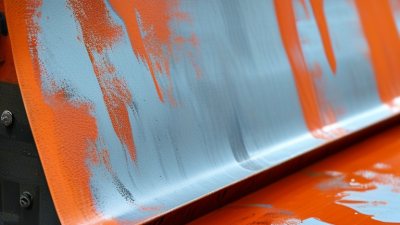
Specify foil width, coating pattern, target loading, and whether one or both sides will be coated. A narrow laboratory web may tolerate frequent adjustments; a wide production line needs stable tension and precise edge control. Check how the coating head handles your intended thickness and whether the dryer can remove solvent evenly across the web. Look closely at sample rolls. Streaks, edge beads, or uneven drying can reveal problems that a specification sheet misses.
Production requirements shape the final choice.
Estimate usable output, changeover frequency, scrap tolerance, and planned operating hours. Leave room for maintenance access and future recipe changes. More speed is not always better. A fast line that struggles with coating uniformity can create costly rework. Ask for trial data using your materials and clear measurement methods. Even then, results may not match every shift or operator. That uncertainty deserves attention.
Compare Coating Methods and Machine Configurations
Choosing a lithium battery coating machine means matching the coating method to electrode design, throughput, and drying capacity. The International Energy Agency reported that battery demand for electric vehicles reached about 750 GWh in 2023, up roughly 40% from 2022. That growth raises pressure to scale production, but speed alone is a poor buying criterion. A machine that runs quickly can still waste slurry through uneven edges or unstable loading.
Slot-die coating offers precise, repeatable layer control and suits continuous production. Comma-bar or doctor-blade systems can be practical for flexible setups, though maintaining uniform thickness may become harder at high speeds. Intermittent coating is useful when electrodes need uncoated tabs; continuous coating may simplify high-volume runs. Check whether the configuration handles single- or double-sided coating, foil widths, slurry viscosity, and the intended drying profile. Ask for trial data using your actual slurry and current collector. Measure coat-weight variation, edge quality, and start-stop waste. Small defects matter. An IEA figure describes market demand, not a guaranteed production target for any factory. And real-world slurry behavior can expose gaps that a specification sheet misses.
Verify Supplier Capability, Trials, Installation, and Support
Choosing a lithium battery coating machine in 2026 means checking more than its advertised speed. Ask the supplier for coating-uniformity data, operating ranges, and references from applications similar to yours. A polished brochure is not proof. Check whether the team can explain how it controls slurry flow, web tension, and drying conditions across your intended electrode width. Ask what happens when the material or recipe changes.
Request a trial using your own slurry and current-collector foil, if possible. Agree on measurable criteria before the run, such as coating weight variation, edge quality, and defect counts. Inspect samples under consistent lighting, and record the line settings. One successful roll is encouraging, but it may not reveal problems that emerge during longer runs. Trials take time. That is useful time.
Installation planning deserves the same attention as machine specifications. Confirm floor-space, utility, exhaust, and commissioning requirements early; small site mismatches can delay startup. Ask who trains operators, how maintenance procedures are documented, and what response time support can realistically provide. Get spare-parts recommendations tied to expected use, not a generic list. Supplier claims still need verification. And be honest about your own process: a machine cannot compensate for unstable slurry preparation or unclear quality targets. I have seen purchasing teams focus on the equipment and leave those questions until late. That is an easy mistake to repeat.