What is a Slot Die Coating Machine and How Does it Work?
In the advanced world of manufacturing, the Slot Die Coating Machine stands out as a pivotal technology. Experts like Dr. Emily Chen, a leading researcher in coating technologies, emphasize its significance, stating, "The Slot Die Coating Machine revolutionizes precision in coating applications." This statement highlights the growing reliance on this machine for consistent, high-quality coatings.
The Slot Die Coating Machine operates by uniformly distributing material onto substrates. This method ensures minimal waste and high efficiency, elements crucial in today’s competitive market. Manufacturers increasingly recognize its role in various industries, from electronics to pharmaceuticals, as it enhances product performance. However, achieving optimal results requires in-depth knowledge and careful calibration, which can challenge some operators.
Despite its advantages, the Slot Die Coating Machine presents complexities. Operators may face difficulties in maintaining uniform thickness across large surfaces. Inconsistent parameters can lead to defects, prompting reflection on process control. As industries evolve, understanding these nuances becomes vital for maximizing the machine's potential while minimizing errors.
What is a Slot Die Coating Machine?
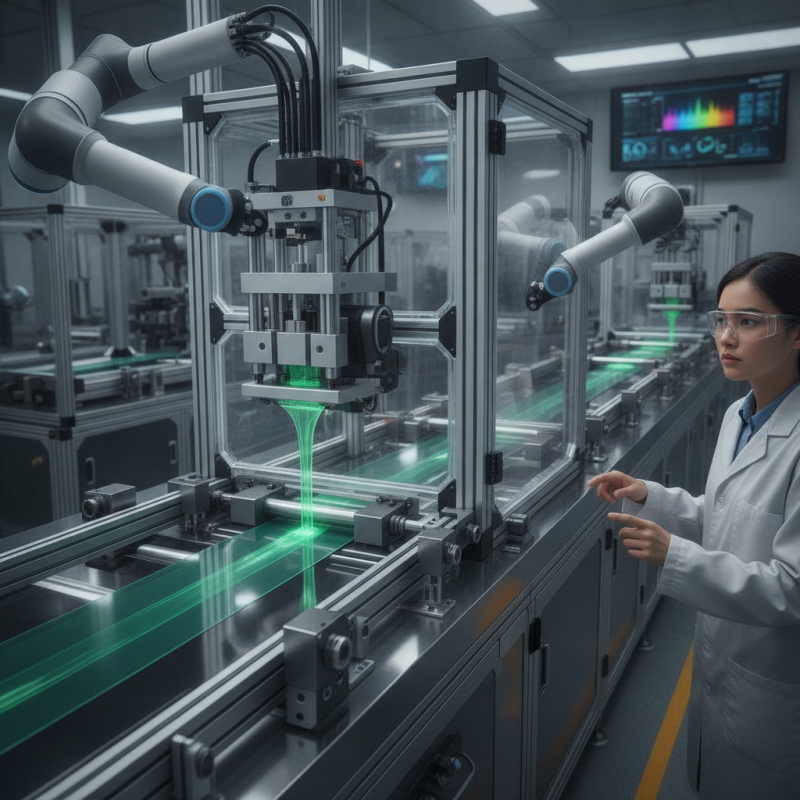
A slot die coating machine is a precise tool used for applying thin films of material onto substrates. Typically utilized in industries like pharmaceuticals, electronics, and renewable energy, these machines enable uniform coating across various surfaces. Reports indicate that the global slot die coating equipment market is expected to grow substantially, showcasing an increasing demand for efficient coating solutions.
These machines operate by delivering a controlled flow of liquid through a slot die onto a moving substrate. The device ensures an even layer, which is crucial for applications such as photovoltaic cells, where coating uniformity affects performance. Industry studies highlight the importance of precision; even a slight variation in coating thickness can lead to significant performance differences. The typical thickness ranges from a few microns to several hundred microns, depending on the application.
While slot die coating machines offer many advantages, including reduced waste and enhanced speed, challenges remain. Maintenance is critical to prevent clogging, which can disrupt production. Furthermore, fine-tuning the process parameters demands expertise. As manufacturers strive for optimal performance, continuous improvement and adaptation remain necessary. Future research may focus on enhancing these coatings' material properties for better functionality and sustainability.
Principles of Slot Die Coating Technology
Slot die coating technology is a sophisticated method utilized for applying thin films of material onto various substrates. At its core, the slot die coating machine operates on a simple yet effective principle. It consists of a die that has a narrow slot. This slot functions as a metering device, controlling the flow of the coating material. As the substrate moves beneath it, the die uniformly deposits the coating. This process is crucial for applications in industries like electronics and pharmaceuticals.
The precision of slot die coating is a significant advantage. The die can produce consistent layer thicknesses across the substrate. However, there are challenges. Achieving perfect alignment and maintaining a uniform coating can be difficult. Variations can lead to defects or uneven applications. Operators must monitor parameters such as viscosity and temperature closely. This level of control ensures that the final product meets stringent quality standards.
Moreover, the versatility of slot die coating allows for various materials, from polymers to metals. This flexibility is both a strength and a potential risk. Different materials require specific adjustments to the coating parameters. Inadequate understanding can result in poor adhesion or incomplete coverage. The technology is continually evolving, making ongoing education and adjustment necessary for optimal results.
Components of a Slot Die Coating Machine
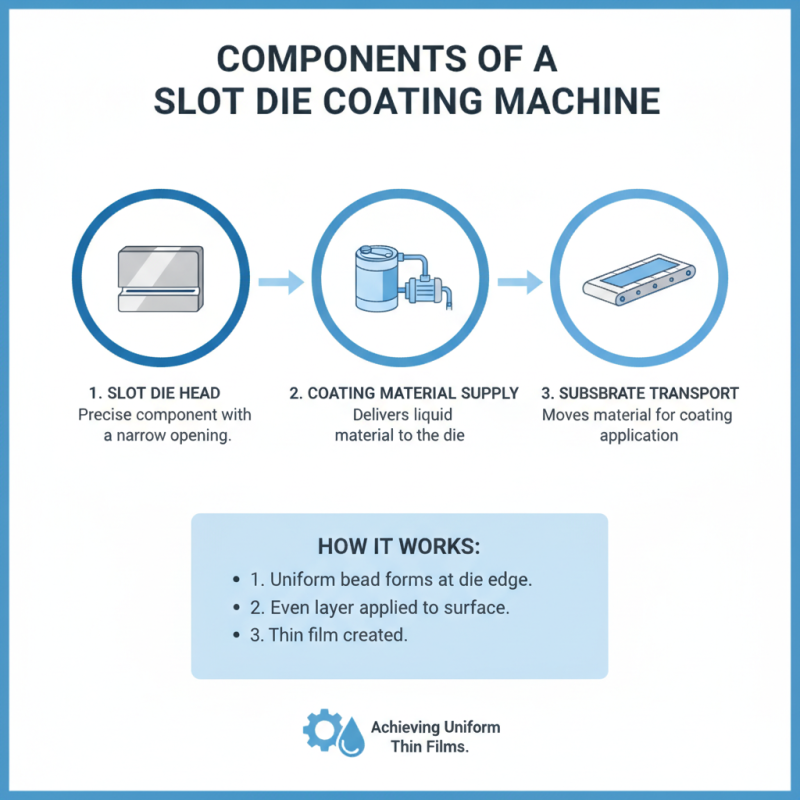
A Slot Die Coating Machine is essential in various industries for precise application of thin films. Its key components work together to achieve uniform coating. The most critical part is the slot die itself. This component has a narrow opening that controls the flow of the coating material. A uniform bead forms at the die edge, creating even layers on surfaces.
Another important component is the substrate holder. It securely holds the material being coated, ensuring stability during the process. The alignment between the substrate and the die is crucial for achieving optimal results. Additionally, the drive system regulates the coating speed. It needs to be adjusted carefully to match the viscosity of the material. If the speed is too fast or slow, it may lead to inconsistencies.
Temperature control units also play a significant role. These systems maintain a specific temperature for the coating material. If the temperature is uncontrolled, it can significantly affect the coating’s performance. Regular calibration of these systems is necessary. Even minor errors in temperature can result in defects. Overall, understanding these components helps in ensuring efficient operation and high-quality output.
How Slot Die Coating Machines Operate
Slot die coating machines are advanced tools widely used in various industries for applying thin, uniform layers of liquid materials on substrates. They operate by creating a highly controlled fluid flow, ensuring accurate coating thickness. The machine consists of a slot die head, where liquid is delivered evenly across the substrate. A key benefit of this technology is its ability to minimize waste. Industry reports note that slot die coating can reduce material usage by up to 30% compared to traditional methods.
These machines are particularly effective for applications in the solar and flexographic printing industries. They maintain high precision, achieving coating thickness in the range of micrometers. However, achieving the desired layer thickness requires careful calibration. Operators need to monitor factors such as viscosity and pressure closely. This precision might pose challenges during transitions between different materials, sometimes leading to inconsistencies.
The technology behind slot die coating does promise efficiency. Yet, users often report issues with the initial setup and troubleshooting. Continuous improvements in material formulations are necessary for optimal performance. Industry studies indicate that while slot die machines can increase production speed, operators must remain vigilant about potential defects. A balanced approach to material management and machine operation is essential to maintain product integrity and performance.
Applications of Slot Die Coating in Various Industries
Slot die coating technology serves various industries, from electronics to automotive sectors. This method is especially effective in applying thin, uniform layers of materials to surfaces. According to a recent market report, slot die coating is projected to grow at a rate of 6.5% annually in the coming years, driven by the demand for advanced materials.
In the electronics industry, slot die coating is used for creating OLED displays and solar cells. The precision of this coating method enhances film uniformity and energy efficiency. Data indicates that the global organic solar cell market could reach approximately $10 billion by 2030, largely due to advancements in coating technologies. In automotive applications, it is essential for applying anti-corrosion coatings, promoting durability.
Tip: Proper equipment maintenance is vital for consistent coating quality. Regular checks can prevent unforeseen issues that lead to production delays. Additionally, ensuring optimal environmental conditions during the coating process helps maintain material properties.
While slot die coating offers many advantages, it is not without challenges. Variations in material viscosity can affect flow rates and film thickness. Companies must invest time in finding the right combinations for their specific needs. Attention to detail during material selection can lead to significant quality improvements over time.