How to Choose a Flat Surface Coating Machine in 2026?
Choosing a flat surface coating machine in 2026 is not simply a matter of selecting the fastest model. The right choice depends on the material, coating, production volume, and finish your operation actually needs. A machine suited to wooden panels may not handle plastic sheets or metal boards equally well.
Start by identifying the substrates, panel dimensions, and coating materials you plan to run. Then compare the machine’s working width, feed speed, coating method, and adjustment range with your real production requirements. Check how consistently it applies coatings across edges and broad surfaces. Ask suppliers for technical specifications and, where possible, run representative samples before committing. A glossy finish on one test panel can hide uneven coverage on another.
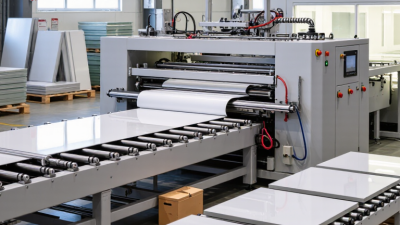
Details matter. The Sheet and Flat Surface Coating Machine you choose should also fit your available floor space and workflow. Review cleaning access, changeover time, operator controls, and the availability of replacement parts. Drying or curing equipment may affect line speed, energy use, and the final finish, so assess it as part of the complete setup. Do not assume a larger machine automatically improves output; it may add cost without solving a production bottleneck.
This guide outlines practical criteria for comparing machines, evaluating supplier claims, and avoiding common selection oversights. Specifications are useful, but they cannot replace a trial with your own materials and coating. Some trade-offs will remain. Recognizing them early can help you choose equipment that performs reliably in everyday production, not just in a brochure.
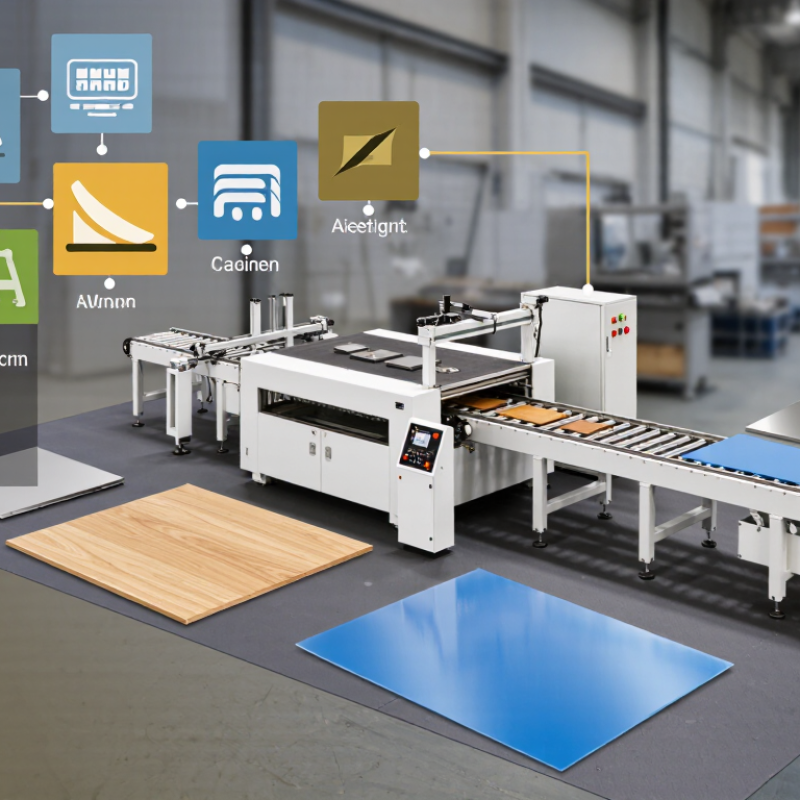
Define the Substrate, Coating Material, and Required Panel Dimensions
Choosing a flat surface coating machine in 2026 starts with the panel itself. Identify the substrate, such as MDF, solid wood, metal, glass, or plastic. These surfaces differ in porosity, smoothness, and heat sensitivity. A porous board may absorb coating unevenly, while a slick surface can challenge adhesion. Check whether panels arrive sanded, sealed, or pretreated. Small details matter.
Next, define the coating material and its application needs. Water-based, UV-curable, and other coatings can vary in viscosity, solids content, and curing requirements. Confirm that the machine’s pumps, rollers, spray system, and drying or curing section suit the material. Ask for operating ranges, not just a broad compatibility claim. Test real panels. A sample run can reveal streaking, edge buildup, or poor coverage that a specification sheet may miss. It may also show that your assumptions need revisiting.
Measure the largest and most common panel dimensions, including thickness and weight. Compare these with the machine’s usable working width and conveying capacity, allowing room for guides, loading, and safe handling. A panel that technically fits may still be awkward to feed. Include smaller, frequent jobs in the assessment; maximum capacity alone can be misleading. If dimensions vary, confirm how quickly settings can be adjusted and whether the coating remains consistent across the full panel.
How to Choose a Flat Surface Coating Machine in 2026? - Define the Substrate, Coating Material, and Required Panel Dimensions
| Substrate |
Typical Coating Material |
Common Application |
Example Panel Dimensions |
Machine Selection Considerations |
| Medium-density fibreboard (MDF) |
Waterborne primer, sealer, or topcoat |
Furniture panels, cabinet doors, and interior components |
600 × 1,200 mm; up to 1,220 × 2,440 mm |
Check panel flatness, edge handling, coating viscosity, and whether the process needs a roller coater, spray system, or both. |
| Plywood |
Waterborne coating, sealer, or UV-curable coating |
Interior joinery, furniture, and decorative panels |
1,220 × 2,440 mm; other sizes depend on the supplier |
Account for veneer variation, surface texture, and panel thickness. Confirm that the feed system can handle the actual sheet size and weight. |
| Particleboard or chipboard |
Primer, sealer, or decorative coating |
Furniture components and laminated or finished panels |
Common sheet formats include 1,220 × 2,440 mm |
Consider dust removal, porous or uneven surfaces, and the coating's ability to seal the substrate before applying a finish layer. |
| Metal sheet |
Liquid primer, protective coating, or powder coating |
Appliance parts, enclosures, and fabricated flat components |
Set by the part design; specify maximum width, length, and thickness |
Distinguish liquid-coating equipment from a powder-coating line. Check surface preparation, grounding where applicable, and curing requirements. |
| Glass |
Glass-compatible liquid coating or ceramic frit |
Decorative, functional, or protective glass surfaces |
Specify the largest pane and its thickness; dimensions vary by application |
Confirm support and conveyance for brittle sheets, coating compatibility, edge clearance, and the required drying or heat-treatment process. |
| Plastic sheet (such as acrylic or polycarbonate) |
Plastic-compatible liquid coating, hard coat, or UV-curable coating |
Protective covers, displays, and formed-part blanks |
Specify the maximum sheet size and thickness for the production job |
Check solvent compatibility, static control, heat sensitivity, and whether the coating needs UV exposure or another curing method. |
Sizing tip: Specify the largest actual panel, including its thickness and weight, then confirm the machine’s usable working area and loading, unloading, and conveyor clearances. Sheet formats shown are examples; verify the dimensions used in your production process.
Match Machine Working Width and Line Speed to Production Targets (mm; m/min)
Start with the largest panel you expect to coat, not the average one. Measure its width in millimetres, including any planned side clearance. A 600 mm panel may need a wider usable coating path once guides and edge margins are considered. Check the machine’s usable working width, not just its advertised maximum. Small details matter. Leave room for slight panel variation, but avoid oversizing so much that coating material and floor space are wasted.
Then estimate the line speed needed in metres per minute. If panels are 1,200 mm long and spaced 300 mm apart, each panel uses about 1.5 metres of conveyor length. At 6 m/min, that is roughly four panels per minute before stops or handling delays. Real output will be lower. Include loading time, curing requirements, inspections, and changeovers in your target. A speed rating alone does not predict finished production.
Compare the calculated target with trial results on your actual material and coating. Track width, speed, wet-film appearance, and defects across several runs. If edges look uneven, the issue may be setup or application consistency, not machine capacity. I would leave a modest speed buffer, but not choose a faster line without confirming that downstream curing and handling can keep pace. Estimates are useful; production data should settle the choice.
How to Choose a Flat Surface Coating Machine in 2026?
Match Machine Working Width and Line Speed to Production Targets (mm; m/min)
These illustrative planning scenarios pair wider working widths with progressively higher line-speed targets. Confirm achievable speed against the coating material, substrate, curing or drying capacity, and required finish quality before selecting equipment.
Compare Film Thickness and Coating Uniformity Using ISO 2808
How to Choose a Flat Surface Coating Machine in 2026?
A coating machine should deliver the specified film thickness across the whole panel, not only at its center. ISO 2808:2019 outlines methods for measuring wet and dry paint-film thickness. Choose a method suited to the coating and substrate; readings from different methods are not automatically comparable. For a flat-line trial, mark five locations: the center and four points near the corners. Record each reading, the average, and the highest-to-lowest spread. Small differences matter.
For example, a nominal 40 μm dry film might produce five readings of 36, 39, 40, 42, and 43 μm. That is a 7 μm range, even though the average is close to target. These figures are illustrative, not an industry benchmark. Compare the results with the project specification and the machine’s stated tolerance.
Repeat the run, too; one panel can hide drift caused by changing feed speed, viscosity, or applicator settings. There is a catch: ISO 2808 explains measurement procedures, but it does not set a universal acceptable thickness or uniformity limit. Ask suppliers to document their test conditions and provide raw readings, not just a mean.
A clean-looking surface can still vary underneath.
Check Finish Quality with ISO 2813 Gloss Units and ISO 2409 Classes (0–5)
When choosing a flat surface coating machine in 2026, judge the finish on test panels, not showroom samples. Measure gloss using ISO 2813 at the appropriate angle: 20°, 60°, or 85°, selected for the coating’s gloss range. Results are reported in gloss units (GU), not percentages. A panel that reads 60 GU at 60° should be compared with another reading taken at the same angle, after equivalent curing and conditioning. Small differences can come from surface texture, film thickness, or measurement position.
Tips: Coat several panels using your intended material and settings. Measure multiple spots, including near the edges. Record the readings and repeat the run; one panel is weak evidence. If the readings vary widely, check application consistency before blaming the machine. Real production conditions can be messier than a controlled test. That matters.
Check adhesion with the ISO 2409 cross-cut test. Its classification runs from class 0, with no detachment, to class 5, with extensive detachment. Lower is better. Use a suitable cutter and follow the method for the coating thickness and substrate; a cross-cut result is not a universal bond-strength value. Compare panels prepared and tested alike. Gloss alone can look excellent while adhesion is poor, so assess both results before selecting equipment. A disappointing first trial may reveal a setup issue, but it should not be dismissed without investigation.
Evaluate Automation, Changeover Time, Energy Use, and Total Cost of Ownership
How to Choose a Flat Surface Coating Machine in 2026?
A suitable flat-surface coating machine should match the work you actually run, not an idealized production plan. Compare automation by checking which tasks it handles: feeding, coating control, drying, inspection, or unloading. More automation can improve consistency and reduce repetitive handling, but it may add setup complexity. Ask operators to run a representative panel and record defects, hands-on time, and output.
Changeover time matters when jobs vary in width, substrate, color, or coating weight. Measure from the last acceptable piece of one job to the first acceptable piece of the next. Include cleaning, recipe selection, fixture adjustments, and purge material. A quick machine can still lose hours if recipes are awkward or access panels are cramped. Small details matter.
Assess energy use during a real production run. Track electricity and, where relevant, compressed air or heat during warm-up and steady operation. Compare energy per good coated square meter, not just motor ratings. Then estimate total cost of ownership, including installation, training, consumables, maintenance, downtime, and service life. Be honest about utilization assumptions; optimistic shift estimates can make payback look better than it is.